Showing posts with label parenting teens today. Show all posts

Friday, September 27, 2013

Tips for Your Teen to Have a Successful Senior Year

The rapid pace of senior year can be an excruciating ordeal for any high school student. There are countless factors to keep track of, and they all seem equally important. As a result, parents should intervene to remove unnecessary hassles from this defining time. Parental assistance can steer a growing child’s focus in the right directions, allowing them to form positive memories without sacrificing long-term academic trajectory. For a truly successful year, there are multiple angles of teenage life that need to be effectively tackled; here are some to keep in mind.

Prepare for Steep Expenses
The Consumerist extensively details how senior year can be the most expensive time of parenthood. There are endless investments to be made, and every single one of them appears to be dire. No amount of preparation can buffer the impact of steep charges, so it is crucial for parents to prepare for those expenses as early as possible. It’s not impossible for senior year to require more than $10,000 of extra expenditures. This spending is distributed across school portraits, yearbook purchases, prom, senior trips, class rings and testing costs. (And that doesn’t even count college application fees.)

Start College Applications Early
Summer is an excellent time to take advantage of universities that allow applications to be tendered early. This prevents in-depth forms from being compounded with the stress of schoolwork during the academic year. Parents should structure a calendar that gives them time to collaborate with their teenager about future plans. Help your college-bound child discern between his interests to make sure they end up going to the right institution of higher learning. To avoid excessive payments, applications should be initially sent to schools at the top of the list. Working together with a teenager bolsters their confidence in transitioning to the next stage of their life. U.S. News and World Report has more strategies for pursuing this process.

Keep Track of Extracurricular Activities
Academic resumes are bolstered by extra school participation, but some extracurricular activities are more valuable than other ones. Core studies should not be sacrificed for the sake of a frivolous after-school group. Parents can monitor their children’s academic commitments to help them fine-tune their approach to education as their schedules become more demanding. Ensure that stable transportation is available for important events, and make sure they have the freedom to experiment with their interests.

Follow Examination Schedules
Sharing a calendar can keep parents mentally attuned to the fast-paced needs of their high school senior. To help your child succeed, avoid planning distractions (nights out, family dinners, etc.) before big tests, and help enforce studying habits during these final days. Parents can keep their teenagers from becoming lost in piles of homework.

Emphasize Social Engagements
Don’t let your kid drown in the work, though. One of the biggest regrets seniors can have is failing to savor the social aspects of being young. This Huffington Post columnist talks about the importance of reveling in childhood friendships as youth comes to a close. After graduation, everyone is going to go down a different path, and this is the last chance for your senior to see many of his friends. Don’t forget that. If he appears to be overworked, then your best option is to encourage increased socialization. Spending time with friends will alleviate the pressures being externally placed on him.

Plan Graduation Parties in Advance
High expectations can incentivize focus during the final months of a high school experience. It also provides a proverbial light at the end of the tunnel for stressed out teenagers. This is the ultimate act of support, but don’t let the promise of a party or reward become a stress in its own right. A balanced strategy of positive reinforcement will help your child gradually achieve goals.

Avoid Excessive Interference
Even if the notion seems counterintuitive, it is actually important to trust a teenager’s instincts sometimes. Your child has made it this far, and he’s about to have to go a lot farther on his own, so it’s time to start letting go of the wheel. Listening is a vital skill for parents to practice at this stage of their child’s development. Often, teenagers just need more compassion. Giving them emotional support is preferable to inundating them with advice, but if your child asks, don’t be afraid to share your wisdom. The most important thing to remember is that he needs to be able to chart his own course. Do all you can do, and then be ready to let go.

Source: Babysitting Jobs

Saturday, July 21, 2012

Teens, Careers and Encouraging Entrepreneurship

Encouraging your teens today is part of parenting.  Every parent wants to see their child succeed.  With all of today’s technology there are many ways social media and social networking can help and in some ways hinder (if they are not careful with what they post online) with their future.


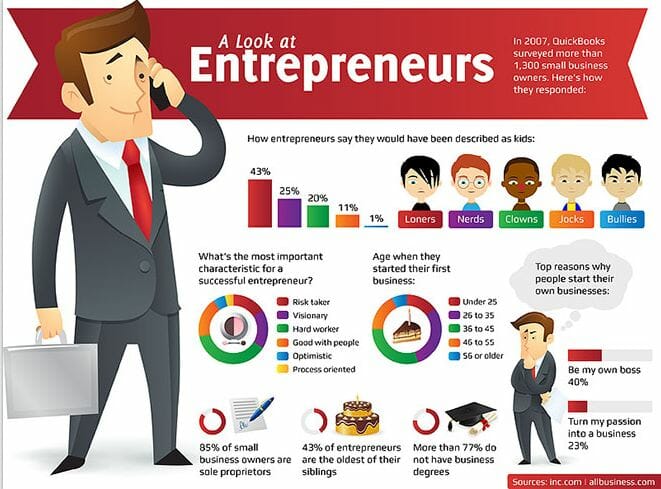
These days, the traditional path of getting a good education and going to work in the corporate world isn’t always the best way to find success. Although it’s still a great choice, many young people prefer instead to take a path of entrepreneurship, and there’s a lot that parents can do to help them follow that path. Lemonade stands, family learning adventures, and smart financial lessons are just a few of the ways that parents can instill an entrepreneurial attitude of success in their children from a very early age.

Read on to find out how you can help your child become a great entrepreneur from the very start.
  1. Kids earn an allowance for chores, not for existing:

    Instill a good work ethic in your children by requiring that they earn their allowance. Emptying the dishwasher, mowing the lawn, and washing the family dog are all ways that kids can learn how to earn money. Take it a step further by encouraging them to do similar tasks for neighbors as a way to earn additional money.
  2. Create a bank account for your child:

    Lay the foundation for earning money by giving it a place to go. When your child earns money, make going to the bank a major event that is it’s own reward. Have fun helping your kids do the math and figure out how much they’ve put away in the bank for all their hard work.
  3. Share opportunities for extra earning:

    Teach your children that going above and beyond leads to increased earning. Give them the opportunity to do more difficult chores that go above what they’re normally expected to do. Trent at The Simple Dollar suggests that kids can pull weeds, and parents will pay a certain amount for every pound of weeds delivered.
  4. Encourage good personal finance skills:

    Kids begging for items at the store might be annoying, but it’s a teachable moment. When your child asks for a toy that’s out of budget or not really necessary, make it a goal to earn enough money to buy it. Encourage your child to come up with ideas for ways to make enough for the toy and maybe even more.
  5. Encourage them to follow their ideas:

    Whether your kids want to start a blog, sell vegetables from your garden, or set up a classic lemonade stand, give them your time and encouragement. Let them learn by doing, and find opportunities for lessons along the way. Ask them to consider how they’ll fund their startup, where to get supplies, how much to charge, how to find their customers, and of course, what to do with the money they earn. You should of course set some limitations for time, legality, and safety, but be open to let your kids explore their own ideas. Allow them to fail, and turn failures into learning moments.
  6. Teach good teamwork:

    Rarely do entrepreneurs succeed completely independently. Even if they’re in business alone, they’re networking, getting others interested, and meeting with people that can help get their business off the ground. Learning how to work with others is essential for success, so be sure to encourage group work in school, in your home, and beyond.
  7. Encourage team sports:

    Team sports are a great way to teach kids to work with others, and they’re also great for learning business lessons. Chances are, they won’t win every game, but the setbacks and hard work that are a part of playing sports can teach kids how to work toward success.
  8. Be available:

    Every great entrepreneur needs a mentor, and for your kids, you are that person. Although you should encourage your child to operate independently, always be there to answer questions or offer helpful suggestions. If you don’t know how to solve a problem, learn how to do it together.
  9. Teach your kids to be self-starters:

    Doing what they’re told is easy for most kids. Asking them to complete certain chores is simple and straightforward. But if you want them to start thinking creatively, encourage their initiative. Ask them to come up with ideas for chores that need to be done, or encourage them to plan a meal and cook for the family once a week.
  10. Encourage adventure and observational skills:

    Some of the best entrepreneurs found success simply by filling a need that no one else even knew existed. The world is full of business opportunities, if only we could notice them. Parents can help their children learn to recognize these types of opportunities by developing observation and creativity. Walk around your neighborhood with your kids and consider which needs are not being met. Do you have neighbors that need lawn care? Businesses that need a website? Teach kids to recognize and anticipate the needs of others.
  11. Teach problem-solving:

    Entrepreneurship can be a bumpy road full of obstacles and challenges to overcome, even for the best-laid plans. Show your children that problems are just solutions that have not been solved yet. Give them small challenges to overcome, and nudge them in the right direction to find a solution.
  12. Show your own entrepreneurial spirit:

    Kids can learn about entrepreneurship by watching you in your own venture. Even if you’re working a 9-to-5 office job, you can take on a small entrepreneurial experience on the side. Selling crafts on Etsy, walking dogs, and doing handyman (or woman) work is a great way to set an example. Be sure to openly share your experiences with your kids.
  13. Tell them about great entrepreneurs:

    In addition to setting your own example in entrepreneurship, encourage your kids to learn from the greats. Tell them the stories of young, successful entrepreneurs like Mark Zuckerberg, who started Facebook in his dorm room. Give them examples and role models to look up to and be inspired by. Show them that others are making it big as entrepreneurs, even other teens and young adults.
  14. Point them in the direction of Junior Achievement:

    Many schools have chapters of Junior Achievement, an organization that brings business owners into schools to teach and mentor students as they create entrepreneurial opportunities. This is a great way for your child to learn about leadership, teamwork, and real world entrepreneurship in a team setting.
  15. Play business games:

    Many games exist to teach kids the basics of business. Make learning about entrepreneurship fun by engaging your children in these games. In one such game, Disney’s Hot Shot Business, children decide what to do when a comic book company leaves town and leaves the opportunity to utilize resources.

Saturday, June 30, 2012

How Young Girls Are Being Over-Sexualized Online: 3 Tips to Help

The Internet is contributing to the over-sexualization of our daughters. Dr. Albert Bandura, a leading psychologist states, “Must human behavior is learned observationally through modeling: from observing others one forms an idea of how new behaviors are performed, and on later occasions this coded information serves as a guide for action.” Our girls are observing a lot online and not all of it is good. They are young and there is a lot of peer pressure and a huge audience watching. Get up to speed and learn about these risks and the new pressures they are facing.

Here are 3 Top things that you need to know:

1. Realize that our kids are like wet cement, with a web address and one click, our kids are seeing things that leave impressions that can stay for a life time. Everyday FB pages are inundated with young teen age girls posing sexually and making facebook comments that would make a sailor blush!
2. Know that we are letting our kids play in traffic. The information super highways with billboard pages that scream, “Because sex sells, that’s what you have to advertise”. On top of this, kids are giving a thumbs up “like” to these sexual comments and pictures and no one’s watching. It’s so sad to see young girls attempting to behave in this manner, believing that the more sexual they behave the more “grown” they are. Little girls are no longer princess in the eyes of society, now they have become pin ups for people to “Like”…and that is sad and disturbing.
3. Be mindful what your kids’ eyes are seeing. You can’t un-see something. The eyes often referred to as the windows to the soul. Repeated viewing of sexual content on the internet has the risk of corrupting our kids into thinking that this is “normal” and then attempting to follow to the norm and mimic that behavior. Kids are posting and reposting what they have just learned. The difference is, she is 12 years old and the guy who just liked her post is someone else’s child or an adult.

As parents, we need to protect our kids from the psychological harm of oncoming mental traffic as much as we need to protect them the bodily harm of oncoming physical traffic. It just makes sense.


This post is a contributed by Parenting Today’s Kids.  An educational and resourceful website with many informational articles to help you and your kids navigate through today’s technology safely.

Sunday, September 27, 2009

Sue Scheff: Homework - are you struggling already with your kids?


The Homework Debate
Every school day brings something new, but there is one status quo most parents expect: homework. The old adage that practice makes perfect seems to make sense when it comes to schoolwork. But, while hunkering down after dinner amongst books and worksheets might seem like a natural part of childhood, there's more research now than ever suggesting that it shouldn't be so.

Many in the education field today are looking for evidence to support the case for homework, but are coming up empty-handed. “Homework is all pain and no gain,” says author Alfie Kohn. In his book The Homework Myth, Kohn points out that no study has ever found a correlation between homework and academic achievement in elementary school, and there is little reason to believe that homework is necessary in high school. In fact, it may even diminish interest in learning, says Kohn.

If you've ever had a late night argument with your child about completing homework, you probably know first-hand that homework can be a strain on families. In an effort to reduce that stress, there are a growing number of schools which are banning homework.

Mary Jane Cera is the academic administrator for the Kino School, a private, nonprofit kindergarten through 12th grade school in Tucson, AZ which maintains a no homework policy across all grades. The purpose of the policy is to make sure learning remains a joy for their students, not a second shift of work that impedes social time and creative activity. Cera says that when new students are told there will be no homework assignments, they breathe a sigh of relief.

Many proponents of homework argue that life is filled with things we don't like to do, and that homework teaches self-discipline, time management and other nonacademic life skills. Kohn challenges this popular notion: If kids have no choice in the matter of homework, they're not really exercising judgment, and are instead losing their sense of autonomy.

At the Kino school, Cera says children often choose to take their favorite parts of school home. “A lot of what we see kids doing is continuing to write in journals, practicing music with their friends, and taking experiments home to show their parents,” she says. Anecdotal information from Kino graduates suggests that the early control over their education continues to serve them well into college; they feel better equipped to manage their time and approach professors with questions.

One of the reasons that we continue to dole out mountains of homework, Kohn says, is our obsession with standardized tests. This concern is especially relevant with the latest Program for International Student Assessment (PISA) results placing American students 25th in math and 21st in science. “The standards and accountability craze that has our students in its grip argues for getting tougher with children, making them do more mindless worksheets at earlier ages so that we can score higher in international assessments,” Kohn says. “It's not about learning, it's about winning.”


Even if we can agree to the importance of kids doing better on tests like PISA, Kohn says, there is no research to suggest that homework is our ticket to success: our “competitors” in the global marketplace are coming up with the same conclusions about homework. A recent comparative study of kids in China, Japan and two U.S. cities shows there is no correlation between time spent on studying and academic achievement.


So, what's the solution? The National Parent Teacher Association suggests children in kindergarten through second grade should do homework for no more than 10-20 minutes a day, and for third through sixth graders the limit is 30-60 minutes a day. Kohn says the question isn't just "How much homework is too much?" Many parents would be delighted if teachers reduced the amount their children are getting, but he says the quality of those assignments needs to be addressed as well. “Some of this stuff isn't worth two minutes of their children's time.”


Kohn believes that the “default” setting for schools should be no homework, but that if evening work was assigned on occasion, it better be for a good reason. That means repetitive practice problems from 500-page textbooks get tossed out the window. Instead, Kohn says parents should be asking two fundamental questions:


Does this assignment make kids more excited about the topic and learning in general?
Does this assignment help kids to think more deeply about questions that matter?


For parents who want to probe deeper into the quality of homework their child is getting, Kohn says the first step is to check the school's policy. In the case where poorly designed homework is being given, it's time to talk to the teacher, sit down with the principal, write a letter to the editor, and/or speak up at the next school board meeting. “It makes sense to do this with other parents,” he says. “Ten parents saying that homework does more harm than good are hard to ignore.”


Wherever the homework debate goes next, be it the front pages or on the back burner, it's worth taking a moment to examine if we're asking the right questions about our child's education. The good news is, it's never too late to start.


For more information on Alfie Kohn and his latest book, The Homework Myth, visit http://www.alfiekohn.org/

Tuesday, July 7, 2009

Sue Scheff: Helping Your Teens Meet Their Goals


Getting your teens involved, helping them realize and reach their dreams and goals – in my opinion, that is part of parenting. Today teens have so much more to deal with, such as peer pressure as well as the competitiveness to get into their first choice colleges. If your teen has that special interest, dream, or goal in life, encourage them to reach for their passion. It can happen!


YES Seminar is about helping your teen reach their success.

Inspire & Connect

Two of the four reasons for this event are to INSPIRE and CONNECT young entrepreneurs, their parents and mentors, not only with other like-minded kids and mentors, but with Inspiring people that have been where you are and the Connectors that have “made it happen” for so many. This is not a Motivational Seminar – it’s purpose is to Inspire you on your journey!

Empower & Educate

The third and fourth reasons are to provide you with the tools you need to Empower and Educate Yourself! We would like to Open your eyes to the amazing Possibilities that are waiting for you, not only here, but right outside the front door of your home, in your town, today!
2009 Young Entrepreneurs Success Seminar, Orlando Fla.


When: September 25-27, 2009
Where: The Caribe Royale, Orlando Florida
Who: Young entrepreneurs aged 9 and up and their parents/guardians/mentors
Web: http://www.yesseminar.com/


The purpose of this event is to inspire, empower and educate young entrepreneurs and their parents to embrace their natural creativity, learn to find and leverage their resources, and grow their businesses and ventures.


Most importantly, this event will CONNECT young entrepreneurs and their parents with other like-minded people! This alone will provide powerful inspiration and empowerment that will live on long beyond the event! These connections will continue to grow within the community that will be created here.


This will be a “conference” unlike any other! Speakers will include best-selling authors such as Bob Burg, author of “The Go-Giver” and “Endless Referrals”, as well as teen entrepreneurs, and experts in fields related to publishing, marketing, social media and more. Breakout sessions will provide parents and teens to receive information specific to them, and will include fun, interactive and highly educational and powerful workshops and activities designed to inspire creativity and innovation, teach team building skills, marketing techniques, public speaking, networking and more! There will also be panel discussions and the opportunity for attendees to talk to speakers and experts one-on-one. Entertainment and time to meet and interact with one another will be an integral part as well.

How Can You Participate?

Attend! We have gone to great lengths to make this event affordable AND incredibly valuable! Ticket prices are $199 for parent AND teen, or $299 for 2 parents and teens. See our website for early bird special at $177. Register online at http://www.yesseminar.com .

Sponsor! Your support can make this event even better, and accessible to even more people.
Sponsor a teen: We would love to offer sponsorships to the many amazing young people who would like to attend, but will be unable to due to finances. Feel free to sponsor an entire family, or simply provide a fixed donation to be applied toward their attendance costs.

Sponsor a portion of the event: We will also gladly promote anyone who would like to sponsor a specific portion of the event (ie. AV equipment provided by______), or a specific activity such as a cookout or workshop.

Sponsor a Speaker: We have young speakers who would be great for our event! Feel free to help them to attend by donating to their travel costs.

Sponsor with your Product: We would love to have products as prizes for our contests and activities! Donations can be gift cards, mp3 players, computers or anything you’d like! If you are a t-shirt designer, or promotional products provider and would like to donate products for our attendees, please contact us.


PROMOTE! Please support us by helping us promote this event! Please share our information, web address, etc with anyone that might be interested in attending, sponsoring, or who may know someone else who would!


Please feel free to contact us at http://www.yesseminar.com or call us by phone at 919-427-7770.

Tuesday, June 16, 2009

Sue Scheff: Parenting Toolbox

This past weekend I was introduced (via online) to an Author and Therapist that specializes in parenting and families. As a Parent Advocate, I have to share this fantastic information with others, so please take the time to learn more. His website provides great parenting advice, tips on raising our children, as well as articles that are educational and informative.

Ron Huxley is the founder of the ParentingToolbox and has helped parents online for over a decade and offline for almost two decades.

Ron is a Licensed Marriage and Family Therapist currently practicing on the Central California Coast. He specializes in trauma, attachment and nontraditional families (like divorced, step, and adoptive families). He is the author of the book “Love and Limits: Achieving a Balance in Parenting” and has been in the field of parenting and mental health for 2 decades.

Ron believes in taking a strength-based approach to parenting that builds on solutions and not problems. He believes that the “person is not the problem, the problem is the problem” and he creatively crafts a parenting strategy that fits each family situation. He is a Certified Family Wellness Instructor, Incredible Years Parenting Instructor and he has advanced training in Play Therapy and Trauma Interventions.

Ron has spoken to parents on the importance of having a Balanced Parenting Styles and Secure Attachment in every conceivable setting, from a Women’s Prison to Parent/Teacher Conferences to Corporate Board Rooms. He has written articles for Disney Family, Child Magazine, Readers Digest, Pregnancy Magazine, the Recovery Journal, Self-Help Online and Woman’s World. He has appeared on numerous television and radio shows including BBC Radio, LA Talk Radio, the Leeza Gibbons Show, Parents Tool Talk Radio and Oprah.com. Currently, he is directing a children’s mental health clinic in California that specializes in attachment and trauma issues for foster care and adoptive families.

Read Ron Huxley’s articles here: http://parentingtoolbox.wordpress.com/
One of his articles is How to Stop Anger