The rapid pace of senior year can be an excruciating ordeal for any
high school student. There are countless factors to keep track of, and
they all seem equally important. As a result, parents should intervene
to remove unnecessary hassles from this defining time. Parental
assistance can steer a growing child’s focus in the right directions,
allowing them to form positive memories without sacrificing long-term
academic trajectory. For a truly successful year, there are multiple
angles of teenage life that need to be effectively tackled; here are
some to keep in mind.
Prepare for Steep Expenses
The Consumerist
extensively details how senior year can be the most expensive time of
parenthood. There are endless investments to be made, and every single
one of them appears to be dire. No amount of preparation can buffer the
impact of steep charges, so it is crucial for parents to prepare for
those expenses as early as possible. It’s not impossible for senior year
to require more than $10,000 of extra expenditures. This spending is
distributed across school portraits, yearbook purchases, prom, senior
trips, class rings and testing costs. (And that doesn’t even count
college application fees.)
Start College Applications Early
Summer is an excellent time to take advantage of universities that
allow applications to be tendered early. This prevents in-depth forms
from being compounded with the stress of schoolwork during the academic
year. Parents should structure a calendar that gives them time to
collaborate with their teenager about future plans. Help your
college-bound child discern between his interests to make sure they end
up going to the right institution of higher learning. To avoid excessive
payments, applications should be initially sent to schools at the top
of the list. Working together with a teenager bolsters their confidence
in transitioning to the next stage of their life. U.S. News and World Report has more strategies for pursuing this process.
Keep Track of Extracurricular Activities
Academic resumes are bolstered by extra school participation, but
some extracurricular activities are more valuable than other ones. Core
studies should not be sacrificed for the sake of a frivolous
after-school group. Parents can monitor their children’s academic
commitments to help them fine-tune their approach to education as their
schedules become more demanding. Ensure that stable transportation is
available for important events, and make sure they have the freedom to
experiment with their interests.
Follow Examination Schedules
Sharing a calendar can keep parents mentally attuned to the
fast-paced needs of their high school senior. To help your child
succeed, avoid planning distractions (nights out, family dinners, etc.)
before big tests, and help enforce studying habits during these final
days. Parents can keep their teenagers from becoming lost in piles of
homework.
Emphasize Social Engagements
Don’t let your kid drown in the work, though. One of the biggest
regrets seniors can have is failing to savor the social aspects of being
young. This Huffington Post
columnist talks about the importance of reveling in childhood
friendships as youth comes to a close. After graduation, everyone is
going to go down a different path, and this is the last chance for your
senior to see many of his friends. Don’t forget that. If he appears to
be overworked, then your best option is to encourage increased
socialization. Spending time with friends will alleviate the pressures
being externally placed on him.
Plan Graduation Parties in Advance
High expectations can incentivize focus during the final months of a
high school experience. It also provides a proverbial light at the end
of the tunnel for stressed out teenagers. This is the ultimate act of
support, but don’t let the promise of a party or reward become a stress
in its own right. A balanced strategy of positive reinforcement will
help your child gradually achieve goals.
Avoid Excessive Interference
Even if the notion seems counterintuitive, it is actually important
to trust a teenager’s instincts sometimes. Your child has made it this
far, and he’s about to have to go a lot farther on his own, so it’s time
to start letting go of the wheel. Listening is a vital skill for
parents to practice at this stage of their child’s development. Often,
teenagers just need more compassion. Giving them emotional support is
preferable to inundating them with advice, but if your child asks, don’t
be afraid to share your wisdom. The most important thing to remember is
that he needs to be able to chart his own course. Do all you can do,
and then be ready to let go.
Source: Babysitting Jobs
Showing posts with label Education. Show all posts
Friday, September 27, 2013
Thursday, May 31, 2012
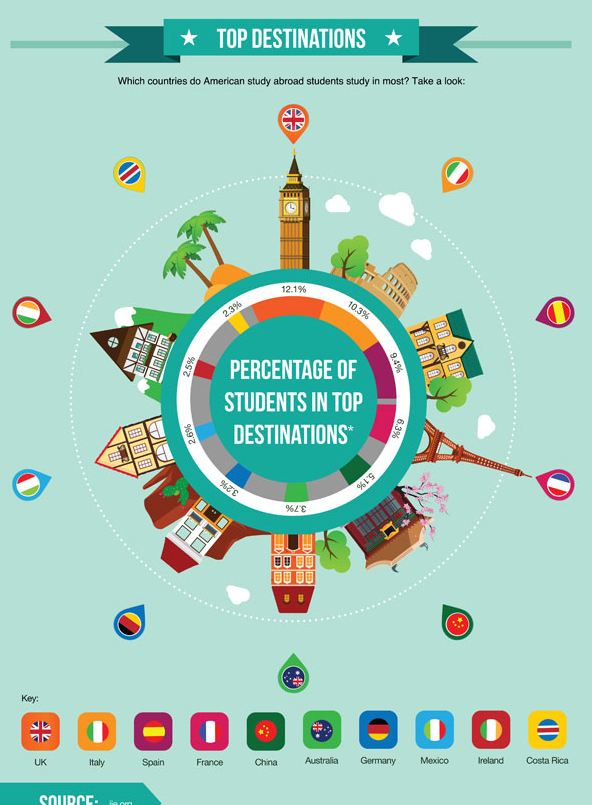
20 Big Reasons Study Abroad Should Be Required Today
Education and experience!
Studying abroad is a great way to find growth, career
inspiration, and great experiences, but so many students today don’t get to
experience this type of learning. In fact, only 1% of all students enrolled in
higher education institutions today choose to study abroad.
The cost of travel,
fear, and an unwillingness to miss out on precious time at school are major
reasons why so many students never go overseas for education, but we’d like to
see students overcome these obstacles and enjoy the benefits of learning in
another country.
Read on to learn why studying abroad is such an important
experience, and why many believe that study abroad programs should be required
for higher education students today.
- There’s no better way to learn a language: Students today need to be linguistically and culturally competent enough to meet the international demands of business, government, and other institutions. But colleges are struggling to graduate students that can keep up. With a study abroad experience, students are immersed in a new language, and forced to quickly adapt and learn how to communicate, a skill that is highly useful in a variety of situations back home.
- Students become more creative: Whether it’s through entrepreneurship, science, or art, creativity and ingenuity are valuable skills for students to develop, and a great way to do just that is to travel abroad. According to the American Psychological Association, living abroad increases a student’s ability to be more creative.
- It’s a great way to discover new strengths: Studying abroad presents students with new situations on a regular basis, offering opportunities for learning new skills, solving problems, and resolving challenges that may not have been experienced at home. This experience can help students become more adaptable to new situations when they came home.
- Study abroad students are simply more employable: Research from GO GLOBAL! indicates that nearly every time, students with study abroad experience will be hired over those who have not gone abroad. This is especially true for students pursuing careers in business. Employers can appreciate that students have taken the extra step to not just travel abroad, but to study in another country, learning a new language, culture, and way of life.
- They get promoted faster, too: Students who not only study abroad, but work abroad, have a major advantage over their peers. A Forbes article indicates that candidates with foreign experience in China and Brazil get a major boost when it comes to promotion, as much as a year or two faster on the promotion track.
- The State Department desperately needs candidates with study abroad experience: Study abroad programs offer Americans benefits in the form of experience and language skills, skills that can be put to use for national security in the State Department. Although the State Department has programs to help fill this need, an uptick in students who have studied abroad would offer a much better pool of applicants to choose from.
- Medical students can study new illnesses: Students with international clinical rotation are exposed to illnesses and clinical presentations that they just don’t get access to in their own schools. This is incredibly helpful for public health in the case of pandemics, rare diseases, and unusual presentations.
- Improved communication skills: Studying abroad isn’t just useful for developing language learning; it’s a great way to improve communication skills in general. As students navigate daily life in a foreign country, they learn how to bridge the gap between the communication they’re used to and the way native speakers communicate with one another. This experience is incredibly helpful for learning how to communicate across different cultures, at home and abroad.
- A break from academic routine: After a couple years in college, some students may feel like they’re stuck in a rut and would welcome a break from daily college life. Some leave to take this break and never come back. But taking a break in the form of studying abroad could prove to be a welcome change from the routine of regular college, keeping students engaged and interested in education instead of becoming burnt out.
- Operating outside of defined comfort zones: At home, students may not have the chance to take many classes outside of their area of study, but studying abroad can present this type of opportunity. Studying a new subject or developing a new skill can be scary, but it builds character and makes students more willing to take on new challenges, a skill that is incredibly valuable in the workplace and in life.
- Developing lifelong learning: Lifelong learning has a host of benefits, supporting a curious, hungry mind. Studying abroad is a great way to spark a love of full-time learning. When traveling outside of their home country, students learn that even mundane experiences like grocery shopping can become educational, and visits to museums and cultural sites are seen for their true value. As these students come home, they may find that their thirst for knowledge has grown and want to spend more time exploring educational activities in their own communities.
- Studying abroad fosters independence: So many students today are the product of helicopter parenting, households in which students are often too sheltered and taken care of to learn how to embrace independence. Studying abroad offers an opportunity for students to develop this independence and learn how to take care of themselves as they see just how much they can do on their own, in a foreign country no less.
- Study abroad is a training ground for future global leaders: Study abroad education fosters growth and attitudes that are respectful of all countries, not just a student’s home country. According to IES Abroad, one of the goals of study abroad is to create future global leaders who are "willing to take a stand for the world’s welfare, not just what benefits a specific country." This eye-opening experience can help create a world of mutual global respect.
- Study abroad offers a lesson in red tape: Every young adult can benefit from a lesson in dealing with the intricacies of red tape and administration, which they will almost certainly experience in their adult and working lives. Applying for study abroad scholarships, visas, foreign degree certifications, and more can offer an opportunity for learning to work through difficult administrative situations while still having access to helpful resources like parents and school administrators.
- An expanded worldview: You can read books, study photographs, listen to music, and even video-conference with people across the world, but there’s just no substitute for actually being there. Students who study abroad can become more open-minded to the world with an insider’s perspective on another country. TransitionsAbroad.com indicated that nearly every student they surveyed, 98%, said that studying abroad helped them to better understand cultural views and biases.
- International networking: Those who study abroad with students from other countries are bound to make friends along the way. Many students with study abroad experience report creating international friendships that have lasted for decades. As they create friendships with fellow international students, and even locals, study abroad participants are creating networking opportunities around the world.
- A refined view of the future: It is not at all uncommon for students to change their major or take a new career direction after studying abroad. The experience allows students to get a new perspective on how the world works, while also discovering new interests and skills that might be better utilized in studies and work that are a bit different than what they originally set out to do.
- Better social skills: Many students have spent their entire academic lives surrounded by other students and friends that they’ve known for years. But in a foreign country, you know almost no one, and are forced to make new friends. This skill is incredibly valuable when it comes time to join the workforce, learn how to network, and collaborate with new people in the workplace.
- A new perspective on domestic issues: The country you live in isn’t the only one with great ideas, but sometimes it can be difficult to get exposed to the insight of different countries. Studying abroad allows students to get an understanding of how other countries are dealing with issues like energy and economics, knowledge that can be put to work back home.
- Studying abroad improves educational outcomes: The Georgia Learning Outcomes of Students Studying Abroad Research Initiative has discovered that studying abroad, thought by some to be a distraction, is quite good for educational outcomes. They’ve found that students who study abroad perform better academically upon their return, and tend to graduate at higher rates than their peers who have not studied in another country. Requiring study abroad experiences could be a great way to help retain and improve educational outcomes for at-risk students.
Source: Online Universities
Subscribe to:
Posts (Atom)