Showing posts with label Online Safety. Show all posts

Thursday, April 16, 2015

Online Safety Measures: Tweens and Online Gaming

Summer is approaching  --- it can mean more time spent in cyberspace especially playing online game for tweens.  Here is a guest post a with 5 safety tips for your pre-teens.
When you look in your living room, are your pre-teens immersed in a video game on a console, computer, or cellphone? Chances are, the games they’re playing have online connectivity. Gartner reports that a large portion of the $111 billion video game market consists of online games. 38 percent of minors enjoy video gaming as a hobby, according to the Entertainment Software Association, and there’s plenty of benefits to encouraging them to play online enabled games. They provide your pre-teens with entertainment, socialization, computer skill development, and brain stimulating activities. Unfortunately, these socialization elements also open your pre-teens up to certain risks and dangers, such as becoming a victim of hacking or social engineering. Knowing how to protect your pre-teens and developing their own risk- aware skills is an essential part of safe online gaming.
Checking for appropriate content
Online games span many genres, from a hidden object game by iWin to MMORPGs such as World of Warcraft. Pay close attention to the rating and types of content and concepts presented in the game your pre-teens are playing. Consider playing along with your children to see exactly what information your kids are picking up, as well as steering them to age appropriate games if the content is not suitable for them. The Entertainment Software Rating Board handles video game ratings, starting at EC for early childhood and going up to AO for adults only.
Checking for Chat rooms
Many online games have chat rooms or messaging functions to provide social interaction with other gamers. Online games with parental controls allow you to filter out bad language, block private messages, and control whether your child gets chat room capability or not. This is another way of ensuring your pre-teens aren’t exposed to inappropriate content. Some games also allow you to mute specific players if a particular individual is harassing your child.
Time Monitoring
The allure of online gaming makes it easy for your pre-teen to spend many hours playing all of the games at their disposal. Track the amount of time that they play through parental monitoring software. Some games, such as World of Warcraft, allow you to prevent an account from being played past a daily or weekly amount, or restricting the time of day that the child can log in. This helps you keep your kids happy with their favorite activities while not allowing it to take up all of their free time.
Avoiding Hackers
Online gaming portals provide hundreds of games through a single website. Some of these games play directly in the browser, while others are downloaded and installed on your computer. Keep the computer anti-virus running to avoid downloads and browser plugins with viruses and trojans attached. Read through gaming portal reviews to find legitimate sites, or check gaming magazines and blogs for this information. Check for https encryption when your child logs into the site, and handle downloadable game installations yourself to stop companion software, such as toolbars, from getting installed.
Check Game Emails
Some online game services send out emails informing players of new developments, specials, and updates. Phishers take advantage of this by posing as official game representatives and tricking users into providing account information. Monitor the email address your child used to sign up with a service, and screen any emails for phishing attempts.
Contributor: James Stewart

Wednesday, September 24, 2014

Why Parents Need To Understand Age Restrictions on Social Media

This is a question that has been lingering for the past couple of years.  We know that kids under 13 are joining, but should they be?

The brave new world of technology has expanded so far that even your grandmother may have an account on the social networking clearinghouse that is Facebook. The fact that your elderly relatives have adopted Facebook, however, doesn’t mean that your child is ready to tackle the social media giant.

When your tween is pleading with you for permission to start a Facebook account and swearing that all of their friends have them, these are 10 of the reasons why you might want to stick to your guns and continue to ban the site for a few more years.
  1. Bullying – Being bullied is a devastating situation, even for teenagers and young adults, but tweens are even more likely to be overwhelmed by bullies online. Kids who aren’t victims of bullying may also find themselves joining in with the crowd picking on another youngster in the no-holds-barred world of the Internet.
  2. Exposure to Questionable Content – Even if your preteen is never approached by a sexual predator, she’s still likely to come across photos or status updates that simply aren’t age appropriate. A child who doesn’t have a Facebook account may be protected from that objectionable content for a bit longer, though.
  3. Online Predators – Sexual predators lurking online are such a problem that entire television series have been dedicated to sting operations designed to catch them. Preteens simply aren’t equipped to properly fend off approaches from predators, and may be more susceptible to their techniques than older kids.
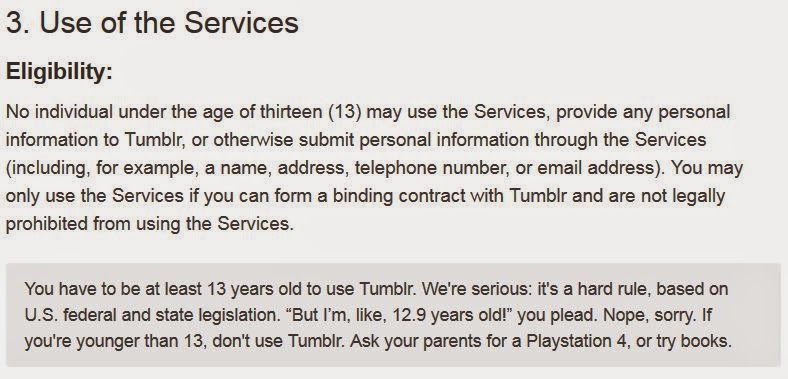
  4. They’re Not Technically Allowed to Have Accounts – If you don’t prohibit Facebook use for your preteen for any other reason, you should consider the fact that allowing them to start an account is tantamount to telling them that it’s okay to lie. Facebook doesn’t allow users younger than 13, so your child will have to falsify her age in order to sign up. Doing so with your permission is effectively sending a message that lying is acceptable behavior if you’re lying to get something you really want.
  5. Reducing Screen Time – Between television, video games and time spent online for homework purposes, kids spend enough of their day planted in front of an electronic screen. Facebook is just another way for your child to while away the hours in sedentary activity, rather than getting outside and being active.
  6. Preserving Academic Performance – When your child is supposed to be online researching homework methods or studying for a big test, his shiny new Facebook account can be a very serious distraction. Kids so young may have difficulty controlling their impulses, and may spend far more time on the social media site than they do actually working.
  7. Protecting Your Computer from Malware – You and your teenagers may have a basic idea of how to avoid malware and spyware sent out by unscrupulous Facebook users, but your tween probably doesn’t. Keeping your child off of social media for a few more years can also be your computer’s saving grace.
  8. Because Kids Lack Adult Judgment – The fact that college students post photographs of binge drinking parties and incriminating status updates at an alarming rate is proof that young people don’t always have the best judgment when it comes to social networking. For a young child, not understanding acceptable Facebook use could lead to them sharing very sensitive personal information that later proves to be dangerous.
  9. Friends Lists Can Be Difficult to Manage – When the friend requests start rolling in, your tween will probably accept each and every one of them because it makes her feel well-liked and cool. That can give some shady characters access to her profile, something she may have trouble understanding when she’s still so young.
  10. Tech-Savvy Tweens Can Block Your Monitoring Efforts – Some preteens may have trouble avoiding malware and managing a friends list, but others will be tech-savvy enough to filter their updates and change security settings that affect what you’re able to see. Even if you think you’re monitoring your child, you may only be seeing a fraction of the things she does online.
If you still think that your preteen is mature and trustworthy enough to have a Facebook account without getting into trouble, the decision is up to you. Be warned, however, that your child could find all of her hard work tossed to the wayside if Facebook administrators discover that she’s maintaining an account before she’s reached the age limit set in the terms of use and decide to delete the account.

Source:  Babysitting Jobs

Thursday, January 23, 2014

Safer Internet Day 2014

Today digital parenting is considered part of raising our kids.  Especially with teenagers an all their gadgets.

Most teens are mobile now, and the ones with cell phones, 48% of them have data plans (internet).

It is more important than ever that parents discuss privacy concerns as well as their digital footprint.  From the moment your child is given a keypad, their future starts on the internet.

Safer Internet Day is about creating a better internet together!

Safer Internet Day (SID) is organized by Insafe in February of each year to promote safer and more responsible use of online technology and mobile phones, especially amongst children and young people across the world.


Tuesday, December 31, 2013

Teens and Fake Profiles on Facebook

Recently I have read reports about teens leaving Facebook.  Of course we can understand why -- more and more parents and seniors are joining Facebook and teens want their privacy!

However I am not convinced that teens are quitting the largest social networking site - for several reasons.  Sure they have Twitter, Instagram, Whatsapp, SnapChat and others - but none will give you the functionality that Facebook has.

I believe teens (and tweens - since we know that minors are also on Facebook) are likely creating fictitious profiles on Facebook.

How would a parent know and why is it important to know?

Safety reasons obviously.  As a parent it is your responsibility to monitor your child's digital life.  Especially if their off-line behavior starts acting suspicious (withdrawn, secretive, changing friends, etc) you need to be aware of what is going on with them so you are able to help.

Recently I wrote an article in Huffington Post Parents with tips to see if your teen has a fake profile on Facebook.  Read more and pass it on to a friend with kids.

Be an educated parent, you will have safer teens! On and off-line.

Thursday, August 29, 2013

Parenting Cyber-Safety: Keeping Your Kids Safe Digitally Speaking

 
Are you a TIP (Technologically Inept Parent)?  Almost 60% of primary school kids know more about technology than their moms, according to new research by Vtech.

Although this may sound amusing, experts agree parents should make the effort to keep abreast of technology for their children’s safety.  Research by Ofcom and EU Kids Online shows around a fifth of parents do not talk to their children about staying safe online, are not confident they can protect their children, and don’t have any rules about safe internet use.

The internet is an amazing resource and has innumerable benefits for our children, but how can we make sure they stay safe online?

Parental Controls
Many parents worry about the content their kids may come across online.  Parental controls can provide some peace of mind.  They let you do things like block selected websites and email addresses by adding them to a filter list, set time limits for use, and prevent your child from searching certain words.  Your internet service provider (ISP) or mobile phone operator will be able to tell you more about any child safety measures they offer.  With younger children, encouraging them to use child-friendly search engines can be a good way to filter content.

Privacy settings
Around 20% of 8 to 15-year-olds with social networking profiles have them set to open, and 29% of UK children have had contact with people they had not met before online.   Banning Facebook is extreme, but there are things you can do to reduce the risks.  Ask your child to select the strongest privacy setting available to ensure that they control who sees their personal information.  Explain why they should never give out personal information to people they only know online – this includes name, home address, phone numbers, bank details, PIN numbers and passwords. It’s also a good idea not to have a username or email address that references their age or gender.

Parenting, not filtering
While filtering tools can be useful, they are no substitute for parenting.  Filtering software is problematic as it can block acceptable sites, and overprotecting your kids might convey that you don’t trust them.  Make sure your kids understand your intentions for watching over them.  Include your child when making a set of rules for using the internet.  Being involved will help them understand the dangers and give them a sense of responsibility.  It’s also important that they feel they can tell you if they experience anything inappropriate that worries them.

Contributor:  Emma Baron of Find A Babysitter

Thursday, August 1, 2013

Teens and Online Porn: Creating Boundaries Online and Off

In the past, pornography was mainly limited to artwork, magazines and the red-light districts. With the Internet and cable television, however, pornography has now made its way into our family rooms, home offices, teens cell phones and kids’ bedrooms. It is easily – and often inadvertently — accessible by children and teenagers, and parents must work even harder to prevent their children from becoming addicted to it.

Experts at the Jacob Wetterling Foundation developed the following tips to help parents prevent their children from becoming addicted to pornography:
  • Place home computers in a central area of the house, not a child’s bedroom or secluded area. Make surfing the Internet a family experience.
  • Talk with your children about what they can and cannot do online, while trying to understand their needs, interests and curiosity.
  • Know your child’s password and screen names; they may have more than one.
  • Set reasonable time limits on computer use, and ensure that your children adhere to the limitations.
  • You should also realize that children may be accessing the Internet from outside the home, such as friend’s homes, work, libraries and school.
  • Be open with your children and encourage them to come to you if they encounter a problem online.
  • Explore filtering and blocking software, which is used to sort information on the Internet and classify it according to content. A major drawback is that some filtering may block innocent sites, while many “negative” sites still get past the filters. Though these programs can be great assets, parents still need to maintain open communication with their children to inform and protect them.
The best cure for addiction is prevention. Many parents may suspect their children of being sexually addicted, but may not be sure of the warning signs. Victor Cline, Ph.D., an expert on pornography and its effects, encourages parents to be on the lookout for the following symptoms of sexual addiction:
  • A pattern of out-of-control sexual behavior
  • Experiencing severe consequences due to sexual behavior, and an inability to stop despite these adverse consequences
  • Persistent pursuit of self-destructive behavior
  • Ongoing desire or effort to limit sexual behavior
  • Sexual obsession and fantasy as a primary coping strategy
  • Regularly increasing the amount of sexual experience because the current level of activity is no longer satisfying
  • Severe mood changes related to sexual activity
  • Inordinate amounts of time spent obtaining sex, being sexual and/or recovering from sexual experiences
  • Neglect of important social, occupational or recreational activities because of sexual behavior
Being an educated parent will help you have safer teens both online and off.

Wednesday, July 24, 2013

Parenting Teens Online: Tips to Help Keep Them Digitally

When used in a responsible and safe manner, the Internet can be one of the most powerful research and educational tools at a child’s disposal. It can expose him to a wealth of knowledge that would otherwise be difficult to obtain, help him experience other cultures and ways of life and encourage him to learn about the world around him. When used irresponsibly by children that have not been adequately taught about the potential dangers, however, the Internet can also be one of the most powerful tools at a predator’s disposal.

These ten tips can help you keep your kids safe without depriving them of the valuable knowledge available online.
  • Take an Active Role in Monitoring – While you’ll want to provide your child with a certain measure of trust and freedom, it’s also important that you maintain an open policy about Internet and social media use. Make sure that you’re keeping tabs on what he’s doing online, and that you’re doing it in an open, honest manner that doesn’t seem like covert spying to your child.
  • Be Honest About Use of Monitoring Software – Monitoring software can be a very effective method of keeping up with what your kids are doing online, but it can also send a very clear message about your lack of trust if it’s used on the sly. Let your children know that there is monitoring software installed, rather than accosting them with evidence of misbehavior out of the blue.
  • Use Content Filtering Features – Web browsers, anti-virus software and search engines all have some level of filtering capability built in to them, so it’s wise to take advantage of those features to block questionable or mature content. Kids can inadvertently stumble over nudity, pornography or violent content without actively seeking it out, and these features make that a bit less likely.
  • Keep Your Computer Located in High-Traffic Areas – When your child has her own computer, she’s free to do her homework or study without tying up the family computer. She’s also able to access questionable content with some degree of privacy. Keeping your computer in a high-traffic area allows you to see what she’s looking at during her browsing sessions.
  • Limit Social Networking Use – Social networking sites are among the most popular on the Internet, but they’re not always a safe place for kids. Make sure that security settings on your child’s account are locked down, that he understands not to accept friend requests from strangers and that his social networking use is kept to a minimum.
  • “Friend” Your Child – While there are filtering options and lists that will allow a determined child to post and share questionable content without you seeing it, not all kids are that tech savvy. Insisting that your child send you a friend request as a caveat of social networking use can be a major deterrent from unsafe and risky behavior online.
  • Talk About Illegal Downloads – Kids don’t always understand the harsh penalties that can come along with copyright infringement and illegal downloading, which is why it’s important for parents and kids to have conversations about the repercussions of breaking the law, even if the Internet seems like a largely anonymous space.
  • Emphasize Values, Rather Than Tech-Savvy Tips – Kids will almost always have technical knowledge that outstrips that of their parents, which is why it’s important to emphasize a set of values over technical methods of staying safe. Talk about what is and is not okay to post online, how to handle scary situations and how to comport themselves rather than how to work the latest safety feature.
  • Keep Tabs on Gaming Devices – Most parents know that their kids’ cell phones and computers are sources of constant connectivity, but may not realize that their gaming consoles also connect to the Internet and put kids at risk of encountering predators. Make sure your little gamer knows never to share personal information with people he plays games with, and that you understand just how much outrageous “trash talk” is normal in the gaming community.
  • Maintain an Open Dialogue About Online Safety – It’s not enough to have one conversation about online safety and to leave it at that. Instead of having a single conversation about safety, establish an ongoing dialogue about what he sees online, what’s okay and what’s not okay.
Source:   Nannywebsites.com

Wednesday, August 29, 2012

Should Parents Befriend their Teens on Facebook?

Kids these days, with their Facebooks and Twitters and the phones that are smart–who do they think they are? Flash Gordon? One thing’s for sure: When it comes to computers, these whippersnappers think their knowledge and expertise leave their parents in the Stone Age. So, Mr. or Ms. Cavedweller, should you be your child’s friend on Facebook? Is it your priority as a parent to protect her, or to trust her to do what she knows is right?

Aye!
Facebook is a netherworld of deceit and temptation–a series of gutters, each overflowing with more filth and depravity than the last. A child has neither the life experience nor the emotional maturity to recognize or appropriately deal with an online con artist or sexual predator. He needs you as his Facebook friend, if only to keep a loving watchful eye over him as he navigates the turbulent waters of social media. He may know every line of code behind Facebook’s technology, but he does not know the darkness that lies in the heart of human sharks who use Facebook as their feeding grounds. He will friend you, and that’s that.

Nay!
The tenuous bond between a parent and a teen is made of thin strands of trust. You have passed your wisdom on to her, you have led by shining example, and you have helped her to learn by her–and your–mistakes. Now is the time when you must let loose the moorings and trust her to row and steer the currents and eddies of the Sea of Facebook to find safe passage to adulthood. Leave her be, and trust that the love you two share will engender two-way trust; when she encounters trouble, she will come to you, knowing that you will assist unconditionally. Do not friend her.

Maybe?
Levity aside, this is not a choice that can be made for you, nor is it one that you should make on your own. Talk with your child; even if you exercise veto power, solicit his input. Don’t enter the discussion with preconceptions or a final decision.
The first thing you should ask is: Why does she use Facebook? Is she simply socializing with real-world friends? Does she collaborate on schoolwork or extra-curricular activities? Is she getting involved in causes or learning more about other cultures? These are a few of the ways in which Facebook can positively influence a teenager.

On the other hand, if you get the feeling that he uses Facebook to bolster his self-esteem by presenting himself to be someone he isn’t, or to find a group to fit in with, investigate further.
Whether her reasons for being on Facebook are positive, troubling, mixed, or unknown, you should at least work out a way in which you can get an idea of who she interacts with and what the tone of those interactions are. If you need more information on how Facebook works and how to talk to your child about it, check out the National Center for Missing and Exploited Children’s (NCMEC) Parent’s Guide to Facebook (PDF).

Guest contributor:  Al Natanagara is a writer, journalist, and blogger whose career includes stints with ZDNet, CNet, CBS, LexisNexis, and law enforcement. He has hundreds of Facebook friends, but all of them are blocked.

Join me on Facebook  and follow me on Twitter for more information and educational articles on parenting today’s teenagers.

Thursday, August 9, 2012

5 Signs Your Teen's Friend Isn't Who They Seem to Be

The Internet has given child predators new hunting grounds: a place where they can pretend to be anyone they need to be in order to gain a child’s trust. But there is only so much that parents can do to limit exposure to potentially dangerous areas of the Internet. Aside from technological safeguards and a list of rules, the best thing moms and dads can do to protect kids from child predators is to observe.

When to Pull the Plug

There are some obvious signs that your child’s online buddy isn’t who he/she seems. For instance, if your child is posting nude or semi-nude photos of herself via chat, social media, and/or email, put a stop to it immediately and contact authorities. When obviously unsafe online activity occurs, take steps to keep your child from accessing the Internet: Remove his cell phone; secure other phones, laptops, and tablets; alert parents of friends; and above all, remain calm. Do not get angry with him or indicate in any way that he is to blame. A child’s trust is easily gained by a crafty, determined predator, and what he needs most at this point is reassurance that there are adults who love and protect him.

Five Not-So-Obvious Signs

Then there are signs that are not so obvious–behaviors on the part of your child or their online acquaintance that could indicate harmless communication among peers, but when they persist or are observed in combination with other signs, they could add up to a dangerous situation.
  1. The “friend” asks questions about your child’s physical attributes, such as height, weight, or bra size. While it is within the realm of possibility that a peer might innocently ask such questions, this is one of the signs that requires cessation of online activities and a thorough investigation into email history and account logs. For more information on monitoring your children’s computer activity, check out the NetSmartz Workshop site.
  2. The “friend” asks to meet your child in person. Even though this is the sign that Law & Order: SVU repeats every other week as the One Sign that signals “predator” in flashing red neon, it can slip by parents if the child’s behavior seems otherwise normal. Before you allow your child to go online unsupervised, let her know that she is to tell you if someone asks her this or any of the questions from sign #1. If she is old enough to go to the mall on her own, you still need to know who else is going; if you have any suspicions at all, check with those kids’ parents before she leaves home.
  3. Your child’s behavior changes. Is he suddenly spending more time online? Does he become angry when he is not allowed to use a computer or cannot get access to one? Does he dodge questions about his online activity? Does he lock the door when he is using his computer?
  4. Your child keeps her online activity secret. Closing a chat window, deleting emails and chat logs, and locking parents out of social media groups could be signs that she is communicating with someone who has told her to hide their relationship from her parents. It could also be typical teen behavior. Err on the side of caution by looking for further instances of this and other telltale behavior.
  5. Your child receives gifts. We are living in a material world, and like it or not, your child is most likely a material girl…or boy. A bribe from a predator could be anything, including any innocent trinket or Bieber-branded product of the moment. Items that raise a red flag include: webcam, cell phone, iPod, iPad, or anything that facilitates online communication and/or seems too expensive for a peer to afford.
For more information on keeping your children safe from predators, visit the website of the National Center for Missing and Exploited Children (NCMEC).

Special guest contributor:  Al Natanagara is a writer, journalist, and blogger whose career includes stints with ZDNet, CNet, CBS, LexisNexis, and law enforcement. He has done his time both in a cubicle and in the real world, but wherever he is, he always has one protective eye on his children.

Join me on Facebook  and follow me on Twitter for more information and educational articles on parenting today’s teenagers.

Thursday, July 26, 2012

Saturday, June 30, 2012

How Young Girls Are Being Over-Sexualized Online: 3 Tips to Help

The Internet is contributing to the over-sexualization of our daughters. Dr. Albert Bandura, a leading psychologist states, “Must human behavior is learned observationally through modeling: from observing others one forms an idea of how new behaviors are performed, and on later occasions this coded information serves as a guide for action.” Our girls are observing a lot online and not all of it is good. They are young and there is a lot of peer pressure and a huge audience watching. Get up to speed and learn about these risks and the new pressures they are facing.

Here are 3 Top things that you need to know:

1. Realize that our kids are like wet cement, with a web address and one click, our kids are seeing things that leave impressions that can stay for a life time. Everyday FB pages are inundated with young teen age girls posing sexually and making facebook comments that would make a sailor blush!
2. Know that we are letting our kids play in traffic. The information super highways with billboard pages that scream, “Because sex sells, that’s what you have to advertise”. On top of this, kids are giving a thumbs up “like” to these sexual comments and pictures and no one’s watching. It’s so sad to see young girls attempting to behave in this manner, believing that the more sexual they behave the more “grown” they are. Little girls are no longer princess in the eyes of society, now they have become pin ups for people to “Like”…and that is sad and disturbing.
3. Be mindful what your kids’ eyes are seeing. You can’t un-see something. The eyes often referred to as the windows to the soul. Repeated viewing of sexual content on the internet has the risk of corrupting our kids into thinking that this is “normal” and then attempting to follow to the norm and mimic that behavior. Kids are posting and reposting what they have just learned. The difference is, she is 12 years old and the guy who just liked her post is someone else’s child or an adult.

As parents, we need to protect our kids from the psychological harm of oncoming mental traffic as much as we need to protect them the bodily harm of oncoming physical traffic. It just makes sense.


This post is a contributed by Parenting Today’s Kids.  An educational and resourceful website with many informational articles to help you and your kids navigate through today’s technology safely.

Wednesday, June 20, 2012

Teen Internet Addiction: Warnings Signs and Tips

When Logout is the hardest button to click!

Does your teen's life revolve around Facebook?


The Faculty of Psychology at the University of Bergen in Norway has found that Facebook addiction is real, and younger Facebook users, including teens, are the most susceptible to addiction.

Facebook addiction, like any addiction, has noticeably detrimental effects. It interferes with a person’s day-to-day life and causes him or her to neglect responsibilities. For your teen, this could mean that Facebook dependence could interfere with academic performance and have a negative impact on your child’s relationships with family members and friends. With some research linking excessive social media use to depression in teens, Facebook addiction could even take a toll on your teen’s mental health.

The researchers at the University of Bergen have developed a Facebook addiction scale that helps determine whether someone is unhealthily dependent on Facebook.

Here are some of the warning signs that could indicate that your teen is addicted to Facebook, according to their research:

1. Your teen spends an excessive amount of time on Facebook and plans his or her day around using the social media site.
2. Your son or daughter's Facebook use has steadily increased since he or she began using the website.
3. Facebook seems to be a means of escaping from the pressures of everyday life for your teen.
4. When Facebook time is limited, your child becomes agitated and upset.
5. Homework and studying takes a backseat to Facebook, and your child's grades suffer. His or her dreams of getting into an Ivy League college have fallen by the wayside. Facebook is now your teen's top priority.

Since Facebook addiction is a relatively recent phenomenon, there isn't much research that indicates how to treat it. Researchers have been aware of internet addiction, which is similar in many respects to Facebook addiction, for a while.

If you want to help treat your son or daughter's Facebook addiction, you might want to try out some of these strategies, which are based on the findings of internet addiction researchers at the University of California, San Francisco:

1. Sit down with your teen and come up with a list of all of his or her favorite activities that aren't related to Facebook. Take the list out whenever your child has some free time, and encourage him or her to take part in the activities on the list.
2. Set time limits for your teen's internet use. If your teen's only able to spend forty-five minutes on the computer each evening, it'll be rather difficult for him or her to stay addicted to Facebook. If you try out this strategy, you can expect that your teen won't be very happy at first. Just remember that you're the parent, you're in control, and you're doing what's best for your child.
3. Reward your teen for decreased Facebook use. Each week or month your child uses Facebook appropriately, reward him or her with a book, movie, mp3, trip to the museum, or other incentive. This will help encourage healthy internet habits and encourage interest in other forms of entertainment that are separate from Facebook.
4. If your teen's Facebook addiction is particularly worrisome, consider therapy and medication options. Certain types of medication have worked wonders for people with internet addiction. Talk to your family doctor about treatment in the form of medication, and consider setting up an appointment for your teen to meet with a therapist.

Facebook addiction is a real problem. If you think your teen is dependent on Facebook, it's your job to be proactive about it and nip the dependence in the bud. The life of a teenager should be exciting and full of opportunities. So, don't let any sort of addiction hinder your child's growth into a healthy and happy adult.
Contributor:  Nadia Jones is an education blogger for onlinecollege.org. She enjoys writing on topics of education reform, education news, and online learning platforms. Outside of the blogging world, Nadia volunteers her time at an after school program for a local middle school and plays pitcher for her adult softball team. She welcomes your comments and questions at nadia.jones5@gmail.com.

Join me on Facebook and follow me on Twitter for more information and educational articles on parenting today's teenagers.


Saturday, October 8, 2011

Health Benefits of Video Games with Teens

Since home video games were popularized in the '80s, killjoys have blamed them for almost every ill in society. Games have supposedly started wars, made children morbidly obese and caused people to shun the outside world, at least according to their theories. In reality, video games are an entertaining, sometimes time-consuming hobby that falls somewhere between watching TV and reading books.

Believe it or not, there is some good associated with parking yourself in front your favorite console each day. Perhaps you've experienced some of the following health benefits — and, even if you haven't, you can show them to your significant other to convince her/him that you haven't really been wasting massive amounts of time.
  1. They comfort people with depression As with any mind-consuming activity that you thoroughly enjoy, gaming can serve as somewhat of an antidepressant. In the case of Bejeweled, a puzzle game in which players move gems into rows based on their colors, a study indicated that participants experience improved mood and heart rhythm from a session of play. Essentially, it helps people unwind and relax as if they're working on a crossword puzzle — something that certainly isn't viewed as an unhealthy activity.
  2. They improve dexterity A study conducted by psychologists at the University of Rochester found that video game-playing surgical residents and surgeons who were tasked with performing a procedure were 24% faster, made 32% fewer errors and scored 26% better overall. Those percentages were even higher for those who played game in the past for more than three hours. The findings could open the door to training potential surgeons and scientists from an early age. Having surgery soon? You'll be better off if your surgeon is a gamer — imagine that.
  3. They improve your eyesight Forget LASIK eye surgery — you can spend $60 on a video game and experience improvement in your vision. According to researchers at the University of Rochester, people who played action video games for a month were able to identify letters presented in clutter 20% better than before. Incredibly, results were shown after just 30 hours of play. When you play action games, your vision is tested to its limit, and the brain adjusts accordingly. The human body is pretty neat.
  4. They improve social skills Gamers have been unfairly stereotyped through the years as socially inept, significant-other-less freaks who dwell in their parents' basements. The fact of the matter, given the sheer popularity of gaming, is that a variety of individuals with varying personalities compose the gaming community. As it turns out, World of Warcraft, a game that requires players to be social, teaches leadership and conflict resolution skills, according to a Swedish researcher. Although fans of the game may be viewed as cult-like, they're actually strengthening their ability to function in the outside world.
  5. They improve knowledge retention  Video games can be used for the specific purpose of advancing learning. A study conducted at the University of Kansas found they can impart specific knowledge. Researchers administered tests to three different groups, one of which prepared using a PowerPoint lecture and two of which prepared using a video game. Of course, the latter two groups demonstrated better knowledge retention. The advantage of using video games in this case may have been the mere fact that it requires active engagement of the mind, as opposed to almost thoughtlessly looking over slides.
  6.  They increase response time Amazing work is being done at the University of Rochester. In another much-welcomed study, researchers found that video games can provide a training regimen that increases visual reaction times while maintaining accuracy. Certain games require quick processing of sensory information, an activity that can be mastered with practice. If you're a fan of Halo or Call of Duty, take note — those skills could prove useful in other nonviolent endeavors.
  7. They reduce stress Not only do video games serve as a distraction, but they can fight anger. Researchers at Texas A&M University found that playing violent video games, such as Call of Duty 2, gave players an outlet in which to take out their aggression, contradicting the numerous studies that have indicated the opposite. Thinking of going postal? Play Playstation instead.
  8. They improve self esteem It always feels good to crush your opponent in Madden, which naturally makes you feel better about yourself. But did you know there have been games designed for the specific purpose of improving your self esteem? McGill University researchers focused on encouraging positive thoughts and positive attitudes in an effort to remove negative thought patterns. Of course, developing self-esteem is a bit more complex than just playing a video game, but it provides a good start for patterning behavior.
  9. They actually help you exercise and lose weight One of the most obvious health benefits of modern gaming is physical, thanks to the creation of Wii and its exergaming offerings. The International Sports Sciences Association confirmed that such games are effective at getting kids off the couch and increasing their heart rates, a far cry from the stereotype that all gamers are obese oafs. Seniors seeking gentler exercise can play Wii fit, for example, to maintain their health, which is why many senior residences contain the gaming system.
  10. They relieve pain Perhaps pain really is all in the mind. Once again, the key word is "distraction" here, as participating in games can take a player's mind off of their ailment, according to researchers at Emory University. It's most effective using virtual reality, which can transport a player into an entirely different virtual world. This type of therapy has been used with real patients, including those who've endured significant trauma. What's more, there are no side effects — beats the heck out of a lot of medications.
Source:  Best Online Colleges

Join me on Facebook  and follow me on Twitter for more information and educational articles on parenting today's teenagers.

Wednesday, August 24, 2011

Back to School: Cyberbullying can start with cyber-gossip

We are heading into a new school year and more and more we are hearing of the digitial bullying, cyberbullying and sexting.

Gossip can be mean.  Bullies can build on gossip and create stories and ugliness about a student that can go viral in seconds.

In today’s internet age, gossip can be spread at lightning speed to hundreds, thousands or millions of people. The new “party line” is cyberspace where millions of people can all access the same information instantaneously. Just get on your computer, iphone, ipad or blackberry and let the rumors fly.

Here are 10 ways people (including kids) can us new technology to rapidly spread gossip in 2011 (in no particular order).
  1. Email – One way to spread a rumor quickly is to send an email to all the contacts in your account, except the one the rumor is about, of course. Then they can forward it to all their contacts and on it goes from there. You better hope they delete your name when they forward it, or you might get blamed for starting it.
  2. Facebook – Post your gossip on facebook and all your friends will know about it instantly. If they “like” it, comment on it or repost it, all their friends will see it too. Pretty soon you’ve got the rumor spreading quickly.
  3. Myspace – Another social networking sight great for gossiping is Myspace. Post that rumor on a bulletin or your group’s message board and watch it spread like wildfire.
  4. Twitter – You can tweet a rumor and all your Twitter followers will know your juicy gossip in 140 characters or less. They can re-tweet it to all their followers and in no time the gossip is flying through cyberspace.
  5. Blogs – Some people love to spread gossip through their blogs. Even unintentional rumors are sometimes started by bloggers.
  6. Website – You won’t believe some of the stuff you find posted on websites, and you shouldn’t either. There are whole websites put on the web just for the purpose of spreading misinformation. Always remember to check their sources.
  7. YouTube – If you have a registered YouTube account you can upload an unlimited number of videos. If you have a video of someone doing something dubious, this is the best way to spread that rumor to millions of viewers.
  8. Comments – A great way to anonymously spread gossip is to post a comment on a website, blog or YouTube video. You can log in under an assumed username and say all kinds of outrageous things without revealing your identity.
  9. Chat rooms – Another anonymous way to spread rumors are internet chat rooms. You can start with an offhand comment and embellish it as you go.
  10. Texting – If you see or hear something juicy to gossip about, you can send a text message to all your friends. That will get the thumbs flying as the rumor gets spread.
The new social media available has taken gossiping to a whole new level. Unfortunately this can lead to cyber bullying and be very traumatizing to vulnerable people. Celebrities and politicians are easy targets for internet gossip and careers are ruined by unintended tweets. 

Everyone should use the new technology responsibly, but many abuse their newfound privileges. Be careful what you put out into cyberspace or it may come back to haunt you and always check the sources of what you see or read. Chances are it’s just more cyber-gossip.

Source:  Internet Providers

Be an educated parent, you will have safer teens.


Join me on Facebook  and follow me on Twitter for more information and educational articles on parenting today's teenagers.

Tuesday, June 14, 2011

Google and Your Teens: Know Your Digital Profile

Know what the Internet is saying about you.
PEW study shows that about 75% of all Americans are using the Internet. More importantly over 53% of people are Googling each other! Do you know what Google and Bing are saying about you?   Do you know what it says about your teenager?  Is he/she virtually dressed for the college or job interview?

Whether your teen is applying to colleges or interviewing for a job, chances are very good that they are being Googled.

•53% of Americans Google each other. Pew Internet & American Life
•26% of college admissions officers use search engines to research candidates. University of Massachusetts Center for Market Research
•64% of teens say that most teens do things online that they wouldn’t want their parents to know about. anti-drug.com
•77% of executive recruiters use search engines to research applicants. CareerBuilder

What can you do?  Encourage your teens to be sure they are virtually dressed before an Internet search is done on them!  Another words, don’t get caught naked online!  Naked doesn’t necessarily mean nude – it means inappropriate pictures and language that wouldn’t make your parents or grandparents blush!

Here are some 5 quick tips to start. Remember, the Internet is today’s  information highway and your name has a road sign.

1. Sign up for free services and post your resume or other information that pertains to your services, business, profession etc. Some of these services are Visible.me, LookUpPages.com, Ziggs.com, LinkedIn.com.
2. For teenagers that will be applying for colleges, keep in mind, what you post today can haunt you tomorrow. More and more college admissions are using search engines to research their potential candidates. Take the time to secure your social networking sites and other places you surf.  What does this mean? Keep it clean. Don’t post anything you wouldn’t want to show your parents or your grandparents!
3. Be sure to own your own name. Sign up for free services on Blogs with your name as the URL. Blogger.com and WordPress.com are two that are most frequently used. Try to keep them updated as time permits, however owning them is most important.
4. Set up your Google Alerts. You want to know when your name it being used online. This is another free service that will take you minutes to set up and keep you informed when your name is posted on the Internet. Twilert.com is used for Twitter Alerts. This is another free service to be alerted if people are using your name on Twitter.
5. Buy your domain name. This can be minimum in costs and the return will be priceless. Purchasing your name through GoDaddy or another source, can cost you about $9.99 a year (ie: www.suescheff.com). Building a small website can also be cost effective. GoDaddy and Weebly.com offers services to assist you. You may even know someone that can build this for you. Most teens today are very proficient with their technology skills.

Your online resume can literally make or break your interview or acceptance at colleges.  Don’t risk it,  keep your virtual presence alive and clean.

Be an educated parent, pass this on to your teens!

Order today!
Learn more about maintaining your online image, order Google Bomb Book today!

Tuesday, April 19, 2011

10 Reasons Parents Need to Learn about Technology their Kids are Using

Protect your kids online.
According to the results of one survey I read, 46.9% of internet users are under the age of 25.  Taking those results, this article should be an interesting one.  While part of that percentage is probably in their twenties, that leaves a big number below the age of 18.

It is wonderful how new technology has brought us closer to all points of the world.  Technology, especially the Internet has made our once big world small; Insomuch that at any given time we can talk to China or Australia and never leave our home in rural America.  While for the business world that may be a good thing, it goes without saying that for our children, it is a little much for them to be experiencing so much of the world so soon.

I enjoy watching the TV show “To catch a predator”.  Maybe enjoy isn’t the correct word, but it is interesting to say the least.  Maybe the part I like best about is to see the would be pedophile caught, and watch him squirm.  Also knowing it is a foiled attempt to actually meet a young innocent teenager. I like watching as they are hauled off to jail to stay awhile and think about what they are doing or were about to do.  How many are actually rehabilitated is a million dollar question.

The outcry from parents has been so loud against pop-up pornography sites that the Microsoft people have played a big part in stopping most pop-ups.  As careful as I am about certain sites my PC got viruses and I had to have it commercially cleaned.  I was appalled at what they found – so thankfully it was removed with no harm done except the fee I had to pay for getting it cleaned up.

Without thinking young people fill in applications for this or that, leaving themselves open to the world with all their information; from age to sex to likes and dis-likes.  Nothing is hidden on the WWW.  Parents beware of what your children are telling about themselves.  Spammers are good at what they do.  And once Spammed is too late to keep it from happening.

A recent article about parents in China, showed that 42.6 percent of the parents surveyed “strongly oppose their children’s use of Internet” or “relatively oppose”, while as high as 78.4 percent say they worry that surfing Internet could adversely affect children’s study. Another 44.9 percent worry about their children’s exposure to pornography online.

I remember when CHAT was the thing back in the 90’s.  It was weird to get on a chat with people one did not know just to talk (chat) awhile.  It opened up an exciting venture for teens to introduce themselves and chat with people around the world.  Now the truth is – were they from down the street?  Across town?  Was their name really Jack or Mary?  There are a lot of messed up people in the world and children are not mature enough to know the difference in real versus crazy people.

Now there is the ChatRoulette which is supposed to be for viewers above18 years or older, however there is not a place to enter the birth date of the viewer.  By the name Roulette, it gives us a good picture of the content.  It is easily accessible using Skype and what the viewer sees on the screen is anyone’s guess and from what I read it can get pretty graphic even porn-a-graphic.

One thinks of the internet as a place to do research and study.  Invariably it has taken place of my set of World Book Encyclopedia’s.  However not everything on the Internet is true. Just because it is in print and somehow got on the internet, does not make it Gospel.  Everyone has an opinion.  Opinions are not History.  History is an actual accepted record of what happened at a certain point in time.
Kim Komando of CyberSpeak,  brought up an interesting subject with the following:  “We all know that music can alter your mood. Sad songs can make you cry. Upbeat songs may give you an energy boost. But can music create the same effects as illegal drugs?"
This seems like a ridiculous question. But websites are targeting your children with so-called digital drugs. These are audio files designed to induce drug-like effects.  All your child needs is a music player and headphones.”

Do you find this as scary as I do?   I wish I were knowledgeable enough to even discuss it, however it would bear great urgency for Parents to check it out.  I found the information on the USA Today site.  Very informative.

Then there is U Tube, the place where a megabyte of fame is worth everything.  Kids have excess to cameras every day; on their phone or mini video cameras.  In a moment when a young lady has let her guard down can change her life forever.  Or for that matter a young man, being teased can be shown on the WWW and he is embarrassed for life.  What may have started out as a joke, may wind up as being harassment.
We cannot keep our children locked up for short seven years of their teens.  The Internet is technology that is here to stay.  And from the youngest of ages, our children are being exposed to the World Wide Webb.
Warren Buckleitner, editor of Children’s Technology Review says, “Kids are surrounded by screens in a way like never before, at home, in their pockets, in the minivan, and they know how to use them at younger and younger ages and Parents must be a part of it.”   He goes on to say:  “”If you’re going to allow your kid to go to a website or play a game, you have to first check it out yourself.  Think about it, you don’t let your child eat a meal you’ve never tasted before.”

Special guest contributor: Kate Crosten of Internet Services

Read more.

Monday, October 25, 2010

Parenting Teens: Monitoring Your Teens

When safety trumps privacy - is when invasion of privacy is thrown out the window.

As a parent keeping our children safe, especially our new young teen drivers is a priority. Many teens believe they are invincible and accidents only happen to other people.  Sort of like those other people are the only ones that get STD's or have bad things happen.

Newsflash - bad things can happen to good people.


NBC's Kevin Tibbles had an interesting segment today on TODAY about how parents are taking back technology, that their kids are so far advanced in, and using it to protect their teens and children.  The question is, how much parental monitoring is too much? (Watch segment on sidebar.)
The three resources of advanced technology that were discussed are as follows:
  1. ZPass | Ridership Tracking:   For Student TrackingZPass was designed specifically for pupil transportation to monitor student ridership in a safe and non-intrusive way.  Knowing if and when a student got on or off the bus accounts for a significant portion of calls parents make to schools and is information that schools need to know.  ZPass provides accurate and immediate answers. Learn more at http://www.zonarsystems.com/products/zpass/
  2. All Track USA: Receive notification via e-mail or text message when your child arrives at school, pulls into your driveway, goes over a pre-determined speed limit & more. And all speed alerts and Electric Fences changeable on-the-fly on the internet any time!! Learn more at http://www.alltrackusa.com/
  3. My Mobil Watchdog: My Mobile Watchdog monitors your child's cell phone use and instantly alerts you if he or she receives unapproved email, text messages or phone calls. Learn more at http://www.mymobilewatchdog.com/
This is not an endorsement of these products, however an example of technology that is available to help protect and secure the safety of your teens.

The statistics are clear: Traffic crashes are the leading cause of death for teenagers who drive. Drivers who are 16 years old are more than 20 times likely to have an accident as are other drivers. And teenage drivers have the highest crash risk of any age group, and 16-year-olds are the worst.

As  a parent we have a right and a responsibility to take control of the safety of our teenage drivers, you could be saving a life.  If the teen wants to view it as an invasion of privacy, that is something we can live with.  Afterall, they are alive to view it at all.

With the increase of predators online, your child's cell phone is another way these predators can invade their private lives.  Again, as a parent, we can and will do all we can to protect our children.  It is not about being nosy, it is about safety.  We live in a different world today.

Be an educated parent, you will have safer teens.

Read more.