Showing posts with label Facebook. Show all posts

Wednesday, September 24, 2014

Why Parents Need To Understand Age Restrictions on Social Media

This is a question that has been lingering for the past couple of years.  We know that kids under 13 are joining, but should they be?

The brave new world of technology has expanded so far that even your grandmother may have an account on the social networking clearinghouse that is Facebook. The fact that your elderly relatives have adopted Facebook, however, doesn’t mean that your child is ready to tackle the social media giant.

When your tween is pleading with you for permission to start a Facebook account and swearing that all of their friends have them, these are 10 of the reasons why you might want to stick to your guns and continue to ban the site for a few more years.
  1. Bullying – Being bullied is a devastating situation, even for teenagers and young adults, but tweens are even more likely to be overwhelmed by bullies online. Kids who aren’t victims of bullying may also find themselves joining in with the crowd picking on another youngster in the no-holds-barred world of the Internet.
  2. Exposure to Questionable Content – Even if your preteen is never approached by a sexual predator, she’s still likely to come across photos or status updates that simply aren’t age appropriate. A child who doesn’t have a Facebook account may be protected from that objectionable content for a bit longer, though.
  3. Online Predators – Sexual predators lurking online are such a problem that entire television series have been dedicated to sting operations designed to catch them. Preteens simply aren’t equipped to properly fend off approaches from predators, and may be more susceptible to their techniques than older kids.
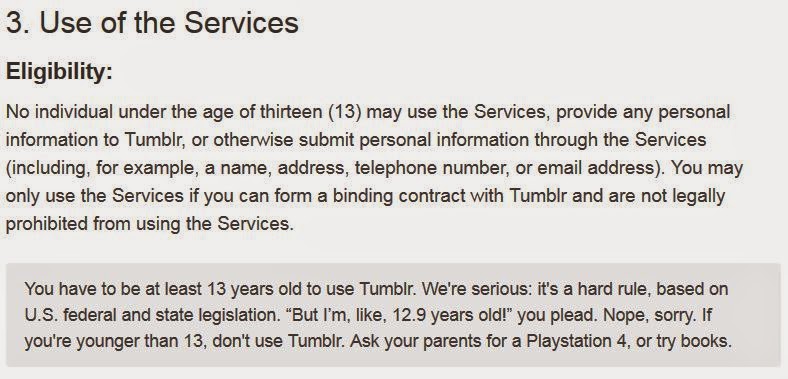
  4. They’re Not Technically Allowed to Have Accounts – If you don’t prohibit Facebook use for your preteen for any other reason, you should consider the fact that allowing them to start an account is tantamount to telling them that it’s okay to lie. Facebook doesn’t allow users younger than 13, so your child will have to falsify her age in order to sign up. Doing so with your permission is effectively sending a message that lying is acceptable behavior if you’re lying to get something you really want.
  5. Reducing Screen Time – Between television, video games and time spent online for homework purposes, kids spend enough of their day planted in front of an electronic screen. Facebook is just another way for your child to while away the hours in sedentary activity, rather than getting outside and being active.
  6. Preserving Academic Performance – When your child is supposed to be online researching homework methods or studying for a big test, his shiny new Facebook account can be a very serious distraction. Kids so young may have difficulty controlling their impulses, and may spend far more time on the social media site than they do actually working.
  7. Protecting Your Computer from Malware – You and your teenagers may have a basic idea of how to avoid malware and spyware sent out by unscrupulous Facebook users, but your tween probably doesn’t. Keeping your child off of social media for a few more years can also be your computer’s saving grace.
  8. Because Kids Lack Adult Judgment – The fact that college students post photographs of binge drinking parties and incriminating status updates at an alarming rate is proof that young people don’t always have the best judgment when it comes to social networking. For a young child, not understanding acceptable Facebook use could lead to them sharing very sensitive personal information that later proves to be dangerous.
  9. Friends Lists Can Be Difficult to Manage – When the friend requests start rolling in, your tween will probably accept each and every one of them because it makes her feel well-liked and cool. That can give some shady characters access to her profile, something she may have trouble understanding when she’s still so young.
  10. Tech-Savvy Tweens Can Block Your Monitoring Efforts – Some preteens may have trouble avoiding malware and managing a friends list, but others will be tech-savvy enough to filter their updates and change security settings that affect what you’re able to see. Even if you think you’re monitoring your child, you may only be seeing a fraction of the things she does online.
If you still think that your preteen is mature and trustworthy enough to have a Facebook account without getting into trouble, the decision is up to you. Be warned, however, that your child could find all of her hard work tossed to the wayside if Facebook administrators discover that she’s maintaining an account before she’s reached the age limit set in the terms of use and decide to delete the account.

Source:  Babysitting Jobs

Thursday, March 22, 2012

Facebook, Teens and Bad Habits They Can Learn from Social Networking Sites

You had to have seen this one coming: kids are picking up bad habits from their extensive use of social media giant Facebook. This can’t come as too big of a surprise though, because it stands to reason that something so popular and fun would be bound to have some ill effects. Not that we’re condemning Facebook, mind you, but there are a few potential pitfalls to watch out for regarding your child’s usage.

The following are seven bad habits that kids pick up from Facebook:
  1. TMI – To be honest, many of us are already guilty of grossly over-sharing our personal lives on Facebook. When you have a place to update your status 24/7, though, it shouldn’t come as any real surprise that eventually one’s entire personal life is right there for anyone and everyone to read on their profile.
  2. Inappropriate Friending – It tends to be an automatic reaction for some to “friend” someone after they’ve added you, accompanied by the friend confirmation request, whether this person is someone you know well or not. While they may not like the idea of saying ‘no’, safety should have a higher priority than popularity.
  3. Posting Inappropriate Photos – Inappropriate photographs always seem to find their way onto people’s Facebook pages. For that matter, taking such photos in the first place is ill-advised, to say the least. Coupled with the prospect of being friended by stalkers and strangers, not to mention being available for any potential employers or school officials, this makes for a very dangerous mix.
  4. Poor Time Management – It’s very easy to lose track of one’s time while socializing on Facebook, and hours at a time can be lost without even realizing it, often at the expense of more important things like homework, chores, etc. It may be wise to install a filter software that can monitor use and block certain sites during specified time periods to ensure that your kids don’t spend too much time on the website.
  5. Indiscriminate Downloading – Facebook is notorious for third party apps that seek to gain access to personal data and the friend lists of members who use them. There’s a large risk associated with accepting gifts via some of these app, unfortunately, that could end up compromising your personal information.
  6. Poor Grammar – As with chat rooms, IM’s, and text messaging, all of which came prior to social media, Facebook posts can tend toward cyber shorthand, whether it’s in the interest of brevity or simply born out of sheer laziness. Although it’s acceptable – even necessary in some cases – to limit character usage, it’s very easy for this habit to leak over to your child’s more formal writing and correspondence.
  7. Not Safeguarding Personal Info – Facebook provides varying levels of privacy settings for its users. Members can share everything with anyone, or limit access to their profile to just friends and/or family. Kids today have become ok and even lax with the safeguarding of their personal information, and identity theft, stalking or harassment can end up being one of the penalties for your child being too open with his or her personal information.
Source:  Become a Nanny

Join me on Facebook  and follow me on Twitter for more information and educational articles on parenting today’s teenagers.

Saturday, December 24, 2011

Teen Suicide - Holiday Blues - Prevention Assistance on Faceback

As the holidays are here it can also be a very dark time for some people.


For anyone who has lost a loved one due to suicide, it is one of the most painful issues they will ever face; sometimes leaving an overwhelming sense of doubt, guilt, and silence enfolding the circle of friends and family like no other experience can. In the wake of this tragedy, we are painfully forced to question- What could I have done? Could I have made a difference? Why didn’t I know?

We don’t have a life to lose in this world. We must confront suicide and suicidal thoughts openly and honestly, and use every opportunity to make a difference by breaking the silence and suffering. Ten years ago the National Strategy for Suicide Prevention was launched. Its objectives galvanized the country around a common goal.  As a result, we have advanced the science and support for suicide prevention programs nationwide.

New suicide prevention work has emerged across the Departments of Defense, Veterans Affairs, Health and Human Services and others. One notable achievement is the establishment of the National Suicide Prevention Lifeline1-800-273-TALK (8255), a number that can be dialed anywhere in the United States to connect the caller with confidential and expert help.

To accelerate the action needed to prevent suicide, former Secretary of Defense Robert Gates and Secretary of Health and Human Services Kathleen Sebelius launched the National Action Alliance for Suicide Prevention with the charge to advance and update the National Strategy. The Action Alliance brings together public, private and nonprofit partners to engage every sector of society with a vision of ending the tragic experience of suicide in America.

Facebook is an important part of that partnership, and the new initiative to augment its response to potentially suicidal members by offering the opportunity for a private chat with a trained crisis representative from the Suicide Prevention Lifeline in addition to providing the Lifeline’s phone number. This service will be available to people who use Facebook in the United States and Canada.

The new service enables Facebook users to report a suicidal comment they see posted by a friend to Facebook using either the Report Suicidal Content link or the report links found throughout the site.  The person who posted the suicidal comment will then immediately receive an e-mail from Facebook encouraging them to call the National Suicide Prevention Lifeline 1-800-273-TALK (8255) or to click on a link to begin a confidential chat session with a crisis worker.

Preventing suicide is everyone’s business. Nearly 100 Americans die by suicide every day, and in the past year, more than eight million Americans 18 or older had thought seriously about suicide. As members of a family, a school, business, neighborhood, faith communities, friends, and our government, we all need to work together to solve this problem.

We simply can no longer allow those we live, work and play with to ever believe that suicide is an acceptable solution even in the worst of times.  Everyone needs to learn about the symptoms of mental illnesses and substance abuse, the warning signs of suicide, how to stand with and support someone who is in crisis, and how to get someone you care about the help they need.

Most of all, we need to be open to talking about these issues in our communities.  Once we begin to support those in need, and whenever possible treat their mental and substance use disorders with the same urgency as any other health condition, we will reduce the rates of suicide, advance health and improve the use of limited health care dollars.

Learn more about the partnership between Facebook, SAMHSA and the National Suicide Prevention Lifeline.

Friday, November 18, 2011

Teen Depression: Know How your Teen is Feeling - Check their FB Status

"Forgive me."
"When will this end?"
"I hate my life"


RED FLAGS and parenting.  Know them!


Facebook is the social hangout of the internet for all ages, but it is particularly true of teenagers.
Teenagers often are much more open about what they are thinking and feeling in this cyber environment than most older adults. Since teens experience many emotional ups and downs, it can be easy to dismiss most of their dramatic postings as nothing more than normal teenage drama. However, there have been too many instances in recent years when parents had wished they’d paid more attention to what their teenager had posted as their ‘current status’.
Here a few status updates parents should watch for and investigate further.
  1. I can’t take it anymore. Although, this could mean anything from homework overload to sibling irritation, it could also be a cry for help from a teen who is truly overwhelmed with life in someway. It is not a status update that you want to ignore. Parents should take the initiative and find out what prompted this entry.
  2. Text me. This may seem innocent enough, but, for some parents, it may be a signal that their teen may be trying to keep something hidden that needs to be in the open. Privacy and protection are always a fine line to walk with teenagers. Parents, however, should never hesitate to ask about the reason behind such a post.
  3. Really loaded right now. If your teen is high enough to make this post on Facebook without thinking about the fact that their parents might see it, there is drug or alcohol abuse going on. Ignoring these types of problems does not make them go away.
  4. Depressing song lyrics. Song lyrics are popular posts from teens. It may be what they’re listening to at the moment or a song that is running through their head. If the lyrics of the songs are continually negative and depressing, this could be an indication of the teen’s emotional state, as well.
  5. No one understands. This is a common feeling during teenage years, but it is also one that can develop into a true depressive state. Seeing this posted as your teen’s Facebook status should raise enough concern for their parents to pursue the reasons behind the posting.
  6. I hate my life. Again, this is not an unusual statement to come from a teen at different points in their adolescence, however, posting it as your Facebook status is similar to shouting it from the rooftops. It is always better to treat these statements seriously, than to ignore them as a simple impulse statement.
  7. Forgive me, Mom & Dad. This kind of post would be one that should require immediate connection with your child. If it doesn’t mention what they are asking forgiveness for, it may be a subtle plea for you to stop them from doing something terrible. Take this very seriously!
  8. You’re all going to die. In light of the terrible things we have seen happen in our schools, a teen who posts something like this should not be ignored. “I was just joking” is not an acceptable explanation for this type of post. A teen who posts such a statement publicly should expect inquiry from, not only his parents, but school and law enforcement as well.
  9. I wish I were dead. Never assume these statements are words only. Any type of suicidal expression like this should be taken very seriously. Many parents have had the misfortune of finding out that even a verbal statement can be an indication of suicidal thoughts. A public posting of that thought should be taken just as seriously.
  10. I hate my school. The key word in this status update is ‘my’. It doesn’t say ‘I hate school’, it is more specific than that. It would behoove the parents to find out what it is, about the child’s school, that made them post this statement, and what can be done to improve the situation.
Facebook status updates reach a lot of people, a parent of a teenager should definitely be one of those people who pays attention to what their child is broadcasting into cyberspace. It may be their way of trying to find out if anyone is really paying attention, and if anyone really cares.

Source: My ISP Finder

Join me on Facebook  and follow me on Twitter for more information and educational articles on parenting today's teenagers.

Tuesday, June 14, 2011

Google and Your Teens: Know Your Digital Profile

Know what the Internet is saying about you.
PEW study shows that about 75% of all Americans are using the Internet. More importantly over 53% of people are Googling each other! Do you know what Google and Bing are saying about you?   Do you know what it says about your teenager?  Is he/she virtually dressed for the college or job interview?

Whether your teen is applying to colleges or interviewing for a job, chances are very good that they are being Googled.

•53% of Americans Google each other. Pew Internet & American Life
•26% of college admissions officers use search engines to research candidates. University of Massachusetts Center for Market Research
•64% of teens say that most teens do things online that they wouldn’t want their parents to know about. anti-drug.com
77% of executive recruiters use search engines to research applicants. CareerBuilder

What can you do?  Encourage your teens to be sure they are virtually dressed before an Internet search is done on them!  Another words, don’t get caught naked onlineNaked doesn’t necessarily mean nude – it means inappropriate pictures and language that wouldn’t make your parents or grandparents blush!

Here are some 5 quick tips to start. Remember, the Internet is today’s  information highway and your name has a road sign.

1. Sign up for free services and post your resume or other information that pertains to your services, business, profession etc. Some of these services are Visible.me, LookUpPages.com, Ziggs.com, LinkedIn.com.
2. For teenagers that will be applying for colleges, keep in mind, what you post today can haunt you tomorrow. More and more college admissions are using search engines to research their potential candidates. Take the time to secure your social networking sites and other places you surf.  What does this mean? Keep it clean. Don’t post anything you wouldn’t want to show your parents or your grandparents!
3. Be sure to own your own name. Sign up for free services on Blogs with your name as the URL. Blogger.com and WordPress.com are two that are most frequently used. Try to keep them updated as time permits, however owning them is most important.
4. Set up your Google Alerts. You want to know when your name it being used online. This is another free service that will take you minutes to set up and keep you informed when your name is posted on the Internet. Twilert.com is used for Twitter Alerts. This is another free service to be alerted if people are using your name on Twitter.
5. Buy your domain name. This can be minimum in costs and the return will be priceless. Purchasing your name through GoDaddy or another source, can cost you about $9.99 a year (ie: www.suescheff.com). Building a small website can also be cost effective. GoDaddy and Weebly.com offers services to assist you. You may even know someone that can build this for you. Most teens today are very proficient with their technology skills.

Your online resume can literally make or break your interview or acceptance at colleges.  Don’t risk it,  keep your virtual presence alive and clean.

Be an educated parent, pass this on to your teens!

Order today!
Learn more about maintaining your online image, order Google Bomb Book today!