Showing posts with label Digital Parenting. Show all posts

Wednesday, September 24, 2014

Why Parents Need To Understand Age Restrictions on Social Media

This is a question that has been lingering for the past couple of years.  We know that kids under 13 are joining, but should they be?

The brave new world of technology has expanded so far that even your grandmother may have an account on the social networking clearinghouse that is Facebook. The fact that your elderly relatives have adopted Facebook, however, doesn’t mean that your child is ready to tackle the social media giant.

When your tween is pleading with you for permission to start a Facebook account and swearing that all of their friends have them, these are 10 of the reasons why you might want to stick to your guns and continue to ban the site for a few more years.
  1. Bullying – Being bullied is a devastating situation, even for teenagers and young adults, but tweens are even more likely to be overwhelmed by bullies online. Kids who aren’t victims of bullying may also find themselves joining in with the crowd picking on another youngster in the no-holds-barred world of the Internet.
  2. Exposure to Questionable Content – Even if your preteen is never approached by a sexual predator, she’s still likely to come across photos or status updates that simply aren’t age appropriate. A child who doesn’t have a Facebook account may be protected from that objectionable content for a bit longer, though.
  3. Online Predators – Sexual predators lurking online are such a problem that entire television series have been dedicated to sting operations designed to catch them. Preteens simply aren’t equipped to properly fend off approaches from predators, and may be more susceptible to their techniques than older kids.
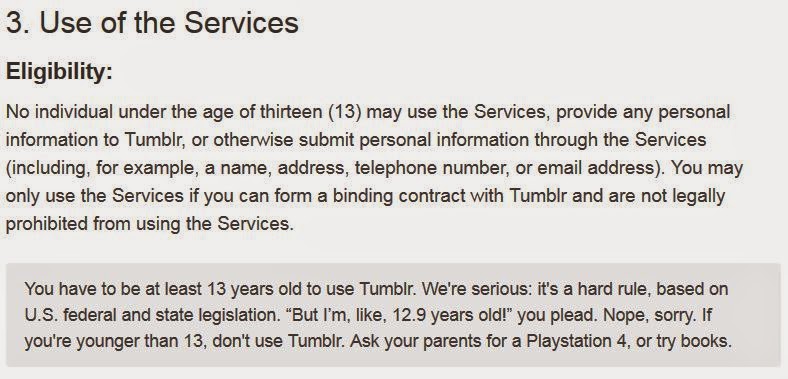
  4. They’re Not Technically Allowed to Have Accounts – If you don’t prohibit Facebook use for your preteen for any other reason, you should consider the fact that allowing them to start an account is tantamount to telling them that it’s okay to lie. Facebook doesn’t allow users younger than 13, so your child will have to falsify her age in order to sign up. Doing so with your permission is effectively sending a message that lying is acceptable behavior if you’re lying to get something you really want.
  5. Reducing Screen Time – Between television, video games and time spent online for homework purposes, kids spend enough of their day planted in front of an electronic screen. Facebook is just another way for your child to while away the hours in sedentary activity, rather than getting outside and being active.
  6. Preserving Academic Performance – When your child is supposed to be online researching homework methods or studying for a big test, his shiny new Facebook account can be a very serious distraction. Kids so young may have difficulty controlling their impulses, and may spend far more time on the social media site than they do actually working.
  7. Protecting Your Computer from Malware – You and your teenagers may have a basic idea of how to avoid malware and spyware sent out by unscrupulous Facebook users, but your tween probably doesn’t. Keeping your child off of social media for a few more years can also be your computer’s saving grace.
  8. Because Kids Lack Adult Judgment – The fact that college students post photographs of binge drinking parties and incriminating status updates at an alarming rate is proof that young people don’t always have the best judgment when it comes to social networking. For a young child, not understanding acceptable Facebook use could lead to them sharing very sensitive personal information that later proves to be dangerous.
  9. Friends Lists Can Be Difficult to Manage – When the friend requests start rolling in, your tween will probably accept each and every one of them because it makes her feel well-liked and cool. That can give some shady characters access to her profile, something she may have trouble understanding when she’s still so young.
  10. Tech-Savvy Tweens Can Block Your Monitoring Efforts – Some preteens may have trouble avoiding malware and managing a friends list, but others will be tech-savvy enough to filter their updates and change security settings that affect what you’re able to see. Even if you think you’re monitoring your child, you may only be seeing a fraction of the things she does online.
If you still think that your preteen is mature and trustworthy enough to have a Facebook account without getting into trouble, the decision is up to you. Be warned, however, that your child could find all of her hard work tossed to the wayside if Facebook administrators discover that she’s maintaining an account before she’s reached the age limit set in the terms of use and decide to delete the account.

Source:  Babysitting Jobs

Thursday, April 17, 2014

Digital Parenting and Cell Phone Etiquette

Remember when phone etiquette simply referred to the rules regarding answering the home phone? Now that most people, including teens, have their own cell phones, phone etiquette has a whole new meaning. It includes courteously using a phone to talk, text and enjoy the other features of today’s smart phones.

Here are some rules to share with your teen to encourage him to be a responsible and polite phone user.

Turn off your phone when you’re having a face to face conversation with someone. The increased use of cell phones, tablets and laptops has taken a toll on personal communication skills. Many teens have a hard time putting their phones down and engaging in a real and sustained conversation with another person. It’s become harder and harder for parents, teachers, coaches and others to connect with teens in meaningful ways, and when they are able to it’s often cut short by technology. While being able to answer the phone every time someone calls is convenient, interrupting a face to face conversation for a phone chat is disrespectful.

Teach your teen to turn off his phone or set it to vibrate (and then ignore it!) when he’s involved in a face to face conversation. Help him understand that by giving someone his full attention, he’s sending the message that he genuinely cares about what the other person is saying. Imagine how great it would be to enjoy dinner with your teen without his phone ringing, beeping or vibrating every few minutes.

Remember that basic phone rules still apply. Although your teen will know most of the people calling him, he will still need to know how to correctly answer a phone call meant for another. Remind him to speak clearly, ask if he can take a message, repeat the message back to the caller and use “please” and “thank you.” As a follow up, he should get the message to the intended party as soon as possible.

Keep the volume down when in a public place. There are few things more annoying than someone loudly chatting away on a cell phone right next to you. Remind your teen that when he’s in a public place like a restaurant or movie theater, he’s sharing that space with a bunch of people who aren’t interested in his conversation. He should keep his voice lowered and step away from the crowd to talk. Some may still be able to hear him, but his phone conversation will be much less intrusive to others.

Keep it G rated. Teens often try out a wide variety of curse words and crude statements as they find their “voice.” Although it’s a natural part of the teen years, that doesn’t mean others should have to endure it. Let him know it’s unacceptable to use that type of language in any public conversation, especially if children or young adults are around.

Don’t talk or text and drive. Not only is this good etiquette, it’s also an essential safety measure. Talking or texting while driving continues to rise and continues to cause injuries and fatalities. Make this a clear and unwavering rule for your teen to keep him and others safe on the road. There are also plenty of hands-free options available today. Many newer cars are equipped with built in Bluetooth connectivity, which makes answering a call or text safer. However, it’s never a good idea for your teen’s attention to be anywhere but the road, so carefully consider if hands-free calling is well suited to your child.

Don’t take pictures or videos without permission. It’s easy to snap a picture or grab a video with today’s smartphone technology. But just because it’s possible, doesn’t mean it’s a good idea. Ask your teen to make sure she has permission from everyone she takes a picture or video of. Many people, including other teens, don’t want to be caught in what others might think are funny poses or situations. Posting inappropriate pictures and videos has become a signature of bullying, so it’s a sensitive topic. Even if your teen has the best intentions when using her smartphone camera, it could lead to problems.

It’s easy for teens to get off track when it comes to phone etiquette. They have fewer and fewer opportunities to learn and practice interpersonal communication skills in their everyday life, so it’s no surprise when phone skills fall by the wayside. A few quick conversations and limits around phone use can easily get your teen back on track.