School is about over, the grades are in and you realize that your teen has failed some courses.
You also have realized they really don't care much about their education at all!
Unfortunately I hear this more and more from parents today. We have
extremely intelligent children capable of getting A's and not working up
to their academic potential. What is going on?
Teens that would rather either just get a GED or some that want to quit
school all together! Years ago that wouldn't even cross our minds -but
today these kids don't recognize the importance of an education.
Especially in today's financial world.
Some parents are also dealing with their smoking marijuana. Some just
brush it under the table and say that it is the same as when the were
kids. Well, it isn't. Pot today can be far more lethal than it was
generations prior.
Whether you are parent that is feeling hostage in their own home or a
parent that feels their teen is heading down a dark path, you now have
determined you need outside help there are steps that every parents
needs to take.
I always tell parents that they need to exhaust all local avenues.
Short of your teen being 17+ years old, (since at that age you only have
12 months to do something - and do it quickly) - you have options to
start with.
Local therapy, support groups, community centers, youth groups and youth
pastors, sometimes sending your teens to live with a relative, changing
schools.... these are all options that may work. Sadly - many times
they don't - which is when you have to face it is time for residential
therapy.
As you get online you have to be so careful of all these wonderful,
colorful websites - tearful testimonials - slick sales reps and toll
free numbers to God knows where. Remember, this is your child you are
searching for, not a car.
I created Parents' Universal Resource Experts, Inc
(P.U.R.E.) exactly for parents in need - parents that have reached
their wit's end and don't know where to turn. On my site you will even
find helpful hints in researching schools and programs and questions to ask.
I urge parents to read my story - when I struggled with my own teen daughter and the mistakes I made.
Remember, this is a major financial and emotional decision - take your time and make an educated decision.
Join me on Facebook
and follow me on Twitter for
more information and educational articles on parenting today's teenagers.
Thursday, June 14, 2012
Friday, June 8, 2012
90% of Teens Admit to Multi-Tasking While Driving
Summer is here! Safety is a priority!
While most people may assume that teens driving in the thick of winter – when it’s dark, cold and wet – would be more dangerous than driving on sunny, warm days, a recent study from AAA states it is actually the summer months that are the most dangerous. In fact, the period between Memorial Day and Labor Day is considered the 100 deadliest days for teen drivers.
“Teens are spending much more time in the car during June, July and August – since they’re out of school and traveling with friends more often,” said Shannon Lara, senior manager, marketing communications for Honeywell Friction Materials. “Sadly – on July 4 alone – an average of 28 teenagers die in motor vehicle crashes.”
Bendix Brakes for Teen Safety, a campaign aimed at educating parents and teens on safe driving and vehicle care, is launching its third video to help bring attention to this dangerous driving season, and alleviate potential problems by making parents and teens aware of three key risk factors that could affect their summer driving.
1. Teens are more likely to speed and tailgate, yet they do not react as quickly as a more experienced driver. A Honeywell Friction Materials study also suggests teens are driving vehicles that average at least 10 years or older and may have a badly worn braking system if not properly maintained. That means new drivers are potentially relying on outdated brakes, along with inexperienced skills, to stop their vehicles.
2. Teens are less likely to wear their seatbelts. According to Honeywell’s survey, even though 90 percent of parents have talked to their teens about the importance of wearing a seatbelt, these young drivers are not following through. Yet having to stop suddenly at 30 miles per hour would have the same impact as if a teen fell three stories out of a building.
3. Teens admit to doing multiple tasks while driving. Distractions – in the form of both mobile devices and other passengers – are probably the most dangerous risk factor as they account for more than 80 percent of all crashes, according to AAA.
During summer, there is no shortage of teens driving together – but Bendix Brakes for Teen Safety suggests parents limit the number of passengers in their teen’s vehicle, as data from AAA reveals that having one teen passenger could double a young driver’s risk of getting into a fatal crash, while having three or more quadruples their risk.
“Helping teens and parents become more aware of how dangerous these risk factors are is key to curbing the number of accidents and crashes,” said Lara. “That’s why we will continue to promote safe driving habits that start before teens even turn the key.”
Visit Bendix Brakes for Teen Safety on Facebook or YouTube for the latest educational video and for more useful tips and information on being a safe teen driver.
Join me on Facebook and follow me on Twitter for more information and educational articles on parenting today's teenagers.
While most people may assume that teens driving in the thick of winter – when it’s dark, cold and wet – would be more dangerous than driving on sunny, warm days, a recent study from AAA states it is actually the summer months that are the most dangerous. In fact, the period between Memorial Day and Labor Day is considered the 100 deadliest days for teen drivers.
“Teens are spending much more time in the car during June, July and August – since they’re out of school and traveling with friends more often,” said Shannon Lara, senior manager, marketing communications for Honeywell Friction Materials. “Sadly – on July 4 alone – an average of 28 teenagers die in motor vehicle crashes.”
Bendix Brakes for Teen Safety, a campaign aimed at educating parents and teens on safe driving and vehicle care, is launching its third video to help bring attention to this dangerous driving season, and alleviate potential problems by making parents and teens aware of three key risk factors that could affect their summer driving.
1. Teens are more likely to speed and tailgate, yet they do not react as quickly as a more experienced driver. A Honeywell Friction Materials study also suggests teens are driving vehicles that average at least 10 years or older and may have a badly worn braking system if not properly maintained. That means new drivers are potentially relying on outdated brakes, along with inexperienced skills, to stop their vehicles.
2. Teens are less likely to wear their seatbelts. According to Honeywell’s survey, even though 90 percent of parents have talked to their teens about the importance of wearing a seatbelt, these young drivers are not following through. Yet having to stop suddenly at 30 miles per hour would have the same impact as if a teen fell three stories out of a building.
3. Teens admit to doing multiple tasks while driving. Distractions – in the form of both mobile devices and other passengers – are probably the most dangerous risk factor as they account for more than 80 percent of all crashes, according to AAA.
During summer, there is no shortage of teens driving together – but Bendix Brakes for Teen Safety suggests parents limit the number of passengers in their teen’s vehicle, as data from AAA reveals that having one teen passenger could double a young driver’s risk of getting into a fatal crash, while having three or more quadruples their risk.
“Helping teens and parents become more aware of how dangerous these risk factors are is key to curbing the number of accidents and crashes,” said Lara. “That’s why we will continue to promote safe driving habits that start before teens even turn the key.”
Visit Bendix Brakes for Teen Safety on Facebook or YouTube for the latest educational video and for more useful tips and information on being a safe teen driver.
Join me on Facebook and follow me on Twitter for more information and educational articles on parenting today's teenagers.
Thursday, May 31, 2012
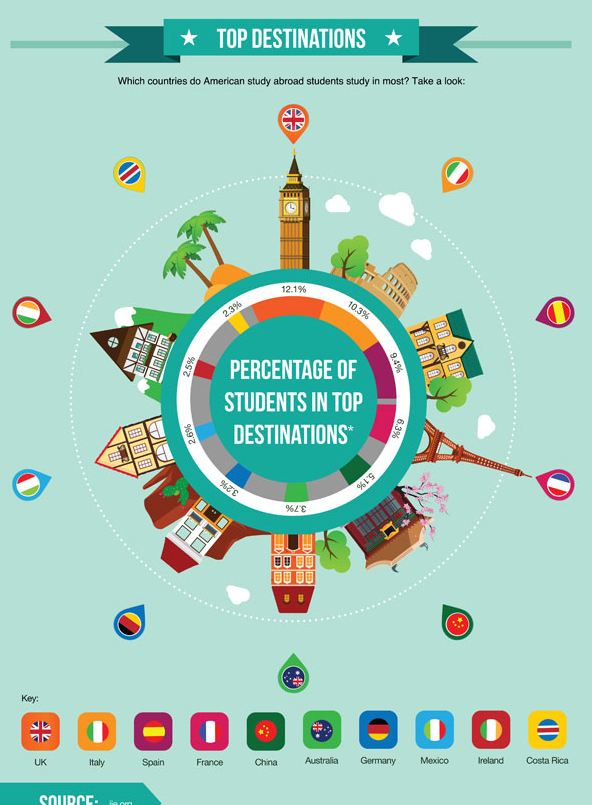
20 Big Reasons Study Abroad Should Be Required Today
Education and experience!
Studying abroad is a great way to find growth, career
inspiration, and great experiences, but so many students today don’t get to
experience this type of learning. In fact, only 1% of all students enrolled in
higher education institutions today choose to study abroad.
The cost of travel,
fear, and an unwillingness to miss out on precious time at school are major
reasons why so many students never go overseas for education, but we’d like to
see students overcome these obstacles and enjoy the benefits of learning in
another country.
Read on to learn why studying abroad is such an important
experience, and why many believe that study abroad programs should be required
for higher education students today.
- There’s no better way to learn a language: Students today need to be linguistically and culturally competent enough to meet the international demands of business, government, and other institutions. But colleges are struggling to graduate students that can keep up. With a study abroad experience, students are immersed in a new language, and forced to quickly adapt and learn how to communicate, a skill that is highly useful in a variety of situations back home.
- Students become more creative: Whether it’s through entrepreneurship, science, or art, creativity and ingenuity are valuable skills for students to develop, and a great way to do just that is to travel abroad. According to the American Psychological Association, living abroad increases a student’s ability to be more creative.
- It’s a great way to discover new strengths: Studying abroad presents students with new situations on a regular basis, offering opportunities for learning new skills, solving problems, and resolving challenges that may not have been experienced at home. This experience can help students become more adaptable to new situations when they came home.
- Study abroad students are simply more employable: Research from GO GLOBAL! indicates that nearly every time, students with study abroad experience will be hired over those who have not gone abroad. This is especially true for students pursuing careers in business. Employers can appreciate that students have taken the extra step to not just travel abroad, but to study in another country, learning a new language, culture, and way of life.
- They get promoted faster, too: Students who not only study abroad, but work abroad, have a major advantage over their peers. A Forbes article indicates that candidates with foreign experience in China and Brazil get a major boost when it comes to promotion, as much as a year or two faster on the promotion track.
- The State Department desperately needs candidates with study abroad experience: Study abroad programs offer Americans benefits in the form of experience and language skills, skills that can be put to use for national security in the State Department. Although the State Department has programs to help fill this need, an uptick in students who have studied abroad would offer a much better pool of applicants to choose from.
- Medical students can study new illnesses: Students with international clinical rotation are exposed to illnesses and clinical presentations that they just don’t get access to in their own schools. This is incredibly helpful for public health in the case of pandemics, rare diseases, and unusual presentations.
- Improved communication skills: Studying abroad isn’t just useful for developing language learning; it’s a great way to improve communication skills in general. As students navigate daily life in a foreign country, they learn how to bridge the gap between the communication they’re used to and the way native speakers communicate with one another. This experience is incredibly helpful for learning how to communicate across different cultures, at home and abroad.
- A break from academic routine: After a couple years in college, some students may feel like they’re stuck in a rut and would welcome a break from daily college life. Some leave to take this break and never come back. But taking a break in the form of studying abroad could prove to be a welcome change from the routine of regular college, keeping students engaged and interested in education instead of becoming burnt out.
- Operating outside of defined comfort zones: At home, students may not have the chance to take many classes outside of their area of study, but studying abroad can present this type of opportunity. Studying a new subject or developing a new skill can be scary, but it builds character and makes students more willing to take on new challenges, a skill that is incredibly valuable in the workplace and in life.
- Developing lifelong learning: Lifelong learning has a host of benefits, supporting a curious, hungry mind. Studying abroad is a great way to spark a love of full-time learning. When traveling outside of their home country, students learn that even mundane experiences like grocery shopping can become educational, and visits to museums and cultural sites are seen for their true value. As these students come home, they may find that their thirst for knowledge has grown and want to spend more time exploring educational activities in their own communities.
- Studying abroad fosters independence: So many students today are the product of helicopter parenting, households in which students are often too sheltered and taken care of to learn how to embrace independence. Studying abroad offers an opportunity for students to develop this independence and learn how to take care of themselves as they see just how much they can do on their own, in a foreign country no less.
- Study abroad is a training ground for future global leaders: Study abroad education fosters growth and attitudes that are respectful of all countries, not just a student’s home country. According to IES Abroad, one of the goals of study abroad is to create future global leaders who are "willing to take a stand for the world’s welfare, not just what benefits a specific country." This eye-opening experience can help create a world of mutual global respect.
- Study abroad offers a lesson in red tape: Every young adult can benefit from a lesson in dealing with the intricacies of red tape and administration, which they will almost certainly experience in their adult and working lives. Applying for study abroad scholarships, visas, foreign degree certifications, and more can offer an opportunity for learning to work through difficult administrative situations while still having access to helpful resources like parents and school administrators.
- An expanded worldview: You can read books, study photographs, listen to music, and even video-conference with people across the world, but there’s just no substitute for actually being there. Students who study abroad can become more open-minded to the world with an insider’s perspective on another country. TransitionsAbroad.com indicated that nearly every student they surveyed, 98%, said that studying abroad helped them to better understand cultural views and biases.
- International networking: Those who study abroad with students from other countries are bound to make friends along the way. Many students with study abroad experience report creating international friendships that have lasted for decades. As they create friendships with fellow international students, and even locals, study abroad participants are creating networking opportunities around the world.
- A refined view of the future: It is not at all uncommon for students to change their major or take a new career direction after studying abroad. The experience allows students to get a new perspective on how the world works, while also discovering new interests and skills that might be better utilized in studies and work that are a bit different than what they originally set out to do.
- Better social skills: Many students have spent their entire academic lives surrounded by other students and friends that they’ve known for years. But in a foreign country, you know almost no one, and are forced to make new friends. This skill is incredibly valuable when it comes time to join the workforce, learn how to network, and collaborate with new people in the workplace.
- A new perspective on domestic issues: The country you live in isn’t the only one with great ideas, but sometimes it can be difficult to get exposed to the insight of different countries. Studying abroad allows students to get an understanding of how other countries are dealing with issues like energy and economics, knowledge that can be put to work back home.
- Studying abroad improves educational outcomes: The Georgia Learning Outcomes of Students Studying Abroad Research Initiative has discovered that studying abroad, thought by some to be a distraction, is quite good for educational outcomes. They’ve found that students who study abroad perform better academically upon their return, and tend to graduate at higher rates than their peers who have not studied in another country. Requiring study abroad experiences could be a great way to help retain and improve educational outcomes for at-risk students.
Source: Online Universities
Friday, May 25, 2012
Teen House Parties: Keeping it Safe and Having Fun
End of school year celebrations!
School will be out shortly!
If you are planning to celebrate a graduation or an end of school year party, always have fun but always play it safe!
PACT Prevention Coalition of St. Johns County offers a great reminder for everyone that is planning to host a party with their kids or teens.
As parties continue to be part of the end of school year celebration for many people, PACT shares valuable information to keep our community safe.
Here are some tips to remind parents on how to host a party with adults and young people in attendance:
PACT’s Mission: To make St. Johns County a healthy, substance-free community through the reduction and prevention of alcohol and drug abuse by our youth with Prevention, Advocacy, Choices, and Teamwork.
Join me on Facebook and follow me on Twitter for more information and educational articles on parenting today's teenagers.
School will be out shortly!
If you are planning to celebrate a graduation or an end of school year party, always have fun but always play it safe!
PACT Prevention Coalition of St. Johns County offers a great reminder for everyone that is planning to host a party with their kids or teens.
As parties continue to be part of the end of school year celebration for many people, PACT shares valuable information to keep our community safe.
Here are some tips to remind parents on how to host a party with adults and young people in attendance:
- Establish firm ground rules and expectations before the party and ask your child to communicate them with his/her guests before the event.
- Know the age of the partygoers and how they know your child.
- Make it clear to guests that alcohol, tobacco, and other drugs are not allowed, and be sure to provide plenty of snacks and non-alcoholic beverages.
- When a guest leaves, do not allow him/her to return. This will discourage guests from leaving to drink or take other drugs and later return under the influence.
PACT’s Mission: To make St. Johns County a healthy, substance-free community through the reduction and prevention of alcohol and drug abuse by our youth with Prevention, Advocacy, Choices, and Teamwork.
Join me on Facebook and follow me on Twitter for more information and educational articles on parenting today's teenagers.
Friday, May 11, 2012
Struggling Teens: Does My Teen Need Resident Therapy?
Summer is approaching.
School is almost out.
My teen, who is very intelligent is failing.
My teen, who once had an interest in sports or music or any other hobby, is now only interested in his/her computer/technology or a group of friends that are not exactly what I would choose for him/her....
My teen is in control of our household. Telling us when he/she will be coming home. Telling us what their curfew is. Total lack of respect for our boundaries.
I am not sure what to do.... Is it typical teen or is it heading done a darker path?
Only you can answer this.
From experience, I can share that many parents should exhaust all local avenues of help first including local therapy. Unfortunately local therapy - one hour once a week rarely is enough to make substantial changes (especially with a 16 year old and up).
If you have come to a dead end, it may be time to consider residential therapy. I always share with parents - don't wait for a crisis to happen, start your research early. Even if you never use it, at least you are prepared if you need it.
The Internet is very confusing. Be careful. What is Internet fact and what is Internet fiction? Good question. Even with my own name and person - I have been a victim of Internet defamation and have been called all sorts of vicious names and accused of things I never did. So you need to be careful.
I encourage you to read my story - which brought me to why I created my organization that advocates for parents that have reached their wit's end.
School is almost out.
My teen, who is very intelligent is failing.
My teen, who once had an interest in sports or music or any other hobby, is now only interested in his/her computer/technology or a group of friends that are not exactly what I would choose for him/her....
My teen is in control of our household. Telling us when he/she will be coming home. Telling us what their curfew is. Total lack of respect for our boundaries.
I am not sure what to do.... Is it typical teen or is it heading done a darker path?
Only you can answer this.
From experience, I can share that many parents should exhaust all local avenues of help first including local therapy. Unfortunately local therapy - one hour once a week rarely is enough to make substantial changes (especially with a 16 year old and up).
If you have come to a dead end, it may be time to consider residential therapy. I always share with parents - don't wait for a crisis to happen, start your research early. Even if you never use it, at least you are prepared if you need it.
The Internet is very confusing. Be careful. What is Internet fact and what is Internet fiction? Good question. Even with my own name and person - I have been a victim of Internet defamation and have been called all sorts of vicious names and accused of things I never did. So you need to be careful.
I encourage you to read my story - which brought me to why I created my organization that advocates for parents that have reached their wit's end.
Join me on Facebook
and follow me on Twitter for
more information and educational articles on parenting today's teenagers.
Saturday, May 5, 2012
College Bound Teens? Don't Risk Rejection with Underage Drinking
School will shortly be out for the summer which means the "party season" will shortly commence.
While it's natural for teens to want to have a good time during their summer break, those that are college- bound should really be careful about what kind of "fun" they engage in—any sort of illegal activity that results in a misdemeanor or worse, a felony, can jeopardize their chances of getting into the university of his-or-her-choice.
Getting a mark on their record even after college acceptance can still come with great consequence. For example, it will most definitely affect their eligibility for Federal Financial Aid and can hinder job prospects, making it hard to pay for school. While there is an array of crimes that a teen can commit, one of the most common offenses is underage drinking.
To help remind your teen of the several drinking-related crimes that can affect their future, read the list below.
1. Minor in Possession. Like the name suggests, anyone who is a "minor" (under the legal drinking age of 21) can get in trouble if he or she is in possession of an alcoholic beverage. This can include actually being caught red-handed drinking, "appearing" to be intoxicated, or simply holding an empty bottle in a public place. Even blood alcohol content of .01 percent is enough to book and issue a $500 fine to minors in some states. In addition to a possible maximum six months in jail sentence, most first-time MPI offenders are required to enroll in an alcohol awareness program and/or be placed on probation.
2. Driving Under the Influence. Arguably one of the most frequent (and not to mention most lethal crimes) is driving while intoxicated. Punishment varies substantially. It heavily depends on whether your teen's blood alcohol content is .08 percent or higher and whether he or she harms anyone.But if you don't, still expect to have to challenge the most maximum punishment, which includes up to 30 days in jail, up to 1 year of a driver's license suspension, up to $1,000 fee, an ignition interlock device installed on his or her vehicle, and community service. Repeated offenders punishments will greatly increase. If your teen is 17-years-old or younger, his or her license suspension will be extended.
3. Contributing to the Delinquency of a Minor. Lastly, some parents think that it's "safer" for their teen to drink inside their home rather than on the streets. But allowing your teen (or his or her friends) to host parties and drink in your home can not only get them charged with an MPI, but you can get charged with contributing to the delinquency of a minor.
Those who are of the legal drinking age and voluntarily serve minors an alcoholic beverage or gives them "easy access" to alcohol is committing a crime. This includes 21-year-old college students giving their underage classmates beer. It happens quite often but if caught, there could be great consequence, such as up to a $1,000 fine and up to six months in jail if someone is injured.
Special contributor:
This guest contribution was submitted by Samantha Gray, who specializes in writing about bachelor degree online. Questions and comments can be sent to: samanthagray024@gmail.com.
Join me on Facebook and follow me on Twitter for more information and educational articles on parenting today's teenagers.
While it's natural for teens to want to have a good time during their summer break, those that are college- bound should really be careful about what kind of "fun" they engage in—any sort of illegal activity that results in a misdemeanor or worse, a felony, can jeopardize their chances of getting into the university of his-or-her-choice.
Getting a mark on their record even after college acceptance can still come with great consequence. For example, it will most definitely affect their eligibility for Federal Financial Aid and can hinder job prospects, making it hard to pay for school. While there is an array of crimes that a teen can commit, one of the most common offenses is underage drinking.
To help remind your teen of the several drinking-related crimes that can affect their future, read the list below.
1. Minor in Possession. Like the name suggests, anyone who is a "minor" (under the legal drinking age of 21) can get in trouble if he or she is in possession of an alcoholic beverage. This can include actually being caught red-handed drinking, "appearing" to be intoxicated, or simply holding an empty bottle in a public place. Even blood alcohol content of .01 percent is enough to book and issue a $500 fine to minors in some states. In addition to a possible maximum six months in jail sentence, most first-time MPI offenders are required to enroll in an alcohol awareness program and/or be placed on probation.
2. Driving Under the Influence. Arguably one of the most frequent (and not to mention most lethal crimes) is driving while intoxicated. Punishment varies substantially. It heavily depends on whether your teen's blood alcohol content is .08 percent or higher and whether he or she harms anyone.But if you don't, still expect to have to challenge the most maximum punishment, which includes up to 30 days in jail, up to 1 year of a driver's license suspension, up to $1,000 fee, an ignition interlock device installed on his or her vehicle, and community service. Repeated offenders punishments will greatly increase. If your teen is 17-years-old or younger, his or her license suspension will be extended.
3. Contributing to the Delinquency of a Minor. Lastly, some parents think that it's "safer" for their teen to drink inside their home rather than on the streets. But allowing your teen (or his or her friends) to host parties and drink in your home can not only get them charged with an MPI, but you can get charged with contributing to the delinquency of a minor.
Those who are of the legal drinking age and voluntarily serve minors an alcoholic beverage or gives them "easy access" to alcohol is committing a crime. This includes 21-year-old college students giving their underage classmates beer. It happens quite often but if caught, there could be great consequence, such as up to a $1,000 fine and up to six months in jail if someone is injured.
Special contributor:
This guest contribution was submitted by Samantha Gray, who specializes in writing about bachelor degree online. Questions and comments can be sent to: samanthagray024@gmail.com.
Join me on Facebook and follow me on Twitter for more information and educational articles on parenting today's teenagers.
Friday, April 27, 2012
Teen Help: Finding the Right Residential Program
School will be ending and summer is fast approaching.
Sending a child to a residential program/school is a major decision. It is not one to be taken lightly or to be decided on overnight.
Usually a teen's behavior has been slowly escalating and a parent knows that deep down things are not getting better. As much as you hope and pray that things will change, this is only typical teen behavior, sometimes it just isn't.
With drug use and substance abuse rising - more dangerous and deadly ingredients being used, such as spice and inhalants, parents have reason to be concerned. It isn't your marijuana of generations prior - it is so much worse and in many cases - addictive and deadly.
If you have reached your wit's end and now surfing the Internet for help, remember, anyone can build a website. Anyone can put up nice pictures and create great content. You need to do your due diligence.
Years ago I struggled with my own teenager. I was at my wit's end. I didn't realize what a big business this "teen help industry" was. Yes, my child needed help, but what we received was anything but that. My story is a cautionary tale - not one to scare you into not using a program, however on the contrary, you have to get your child help, but you have to do your research in getting them the right help.
Here are some quick tips:
Join me on Facebook and follow me on Twitter for more information and educational articles on parenting today's teenagers.
Sending a child to a residential program/school is a major decision. It is not one to be taken lightly or to be decided on overnight.
Usually a teen's behavior has been slowly escalating and a parent knows that deep down things are not getting better. As much as you hope and pray that things will change, this is only typical teen behavior, sometimes it just isn't.
With drug use and substance abuse rising - more dangerous and deadly ingredients being used, such as spice and inhalants, parents have reason to be concerned. It isn't your marijuana of generations prior - it is so much worse and in many cases - addictive and deadly.
If you have reached your wit's end and now surfing the Internet for help, remember, anyone can build a website. Anyone can put up nice pictures and create great content. You need to do your due diligence.
Years ago I struggled with my own teenager. I was at my wit's end. I didn't realize what a big business this "teen help industry" was. Yes, my child needed help, but what we received was anything but that. My story is a cautionary tale - not one to scare you into not using a program, however on the contrary, you have to get your child help, but you have to do your research in getting them the right help.
Here are some quick tips:
- Your child is not for sale, try to avoid those marketing arms selling you a list of programs that are not in the best interest of your child's individual needs.
- Always speak with an owner or director - Someone that has a vested in your teen's recovery. Their reputation is on the line.
- Wilderness and other short term programs are usually nothing more than a band-aid that will fall off as quickly as the program lasted. They are expensive camping trips and in most cases the Wilderness program will tell you at about 4 weeks that your teen will need to continue on to a longer term program. What? Yes, now you go back to the research board and worse than that, your teen will be deflated when he finds out he/she isn't coming home in 6-9 weeks as they were lead to believe - and they will be starting all over again with a new therapist - new schedule - and new setting. Don't get caught up in this "shuffle." Start and finish with the same school/program.
- The average stay should be about 6-9-12 months, depending on your teen. Anything less is probably non-effective. Anything more, you may be creating abandonment issues in my opinion.
- Do you really need an Educational Consultant? Absolutely not. You are the parent and no one knows your teen better than you do - with a few tips, you will be able to make some sound choices.
Join me on Facebook and follow me on Twitter for more information and educational articles on parenting today's teenagers.
Subscribe to:
Posts (Atom)


